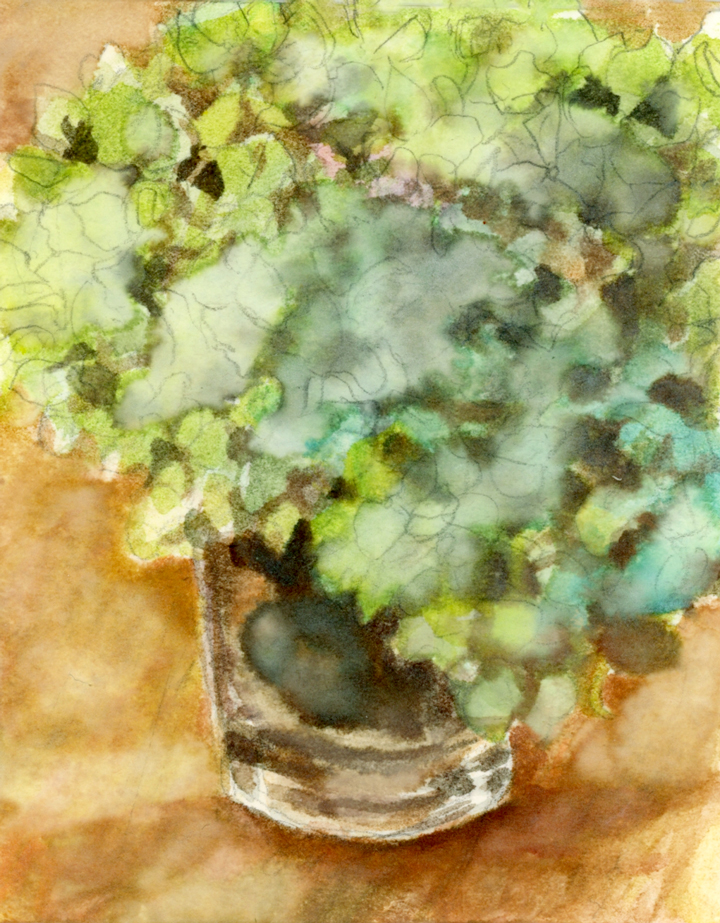
Accountability drives the commitment to blogging daily practice. With accountability, I’m driven to make sure the Petite Painting Project keeps moving forward. After all, it’s OUT THERE, not just in my own world….PUBLIC. So here’s the honest truth: I confess and accept that I am human, and P3 will fall by the wayside from time to time. I have to embrace and accept that as part of this process. This week was one of those times. Plenty of excuses and really, no excuses- just life with two small children, lack of drive and inspiration outside of getting my other commissions accomplished, whatever you want to call it. But I must say, that the week “off” was valuable. It gave me time to just think and look around me (and get over beating myself up a little bit for letting P3 take a back seat). I am beginning to feel energy breathing back into my creative core. So from now on, I won’t shy away from embracing a few days of repose and reflection at the end of each month. After each painting is completed, it gets taped up on my kitchen cabinet doors, so I really live with them. I think I’ll take them down, put them away and start new each month.
I began on August 7, 2012. One month has passed and here’s the look back:
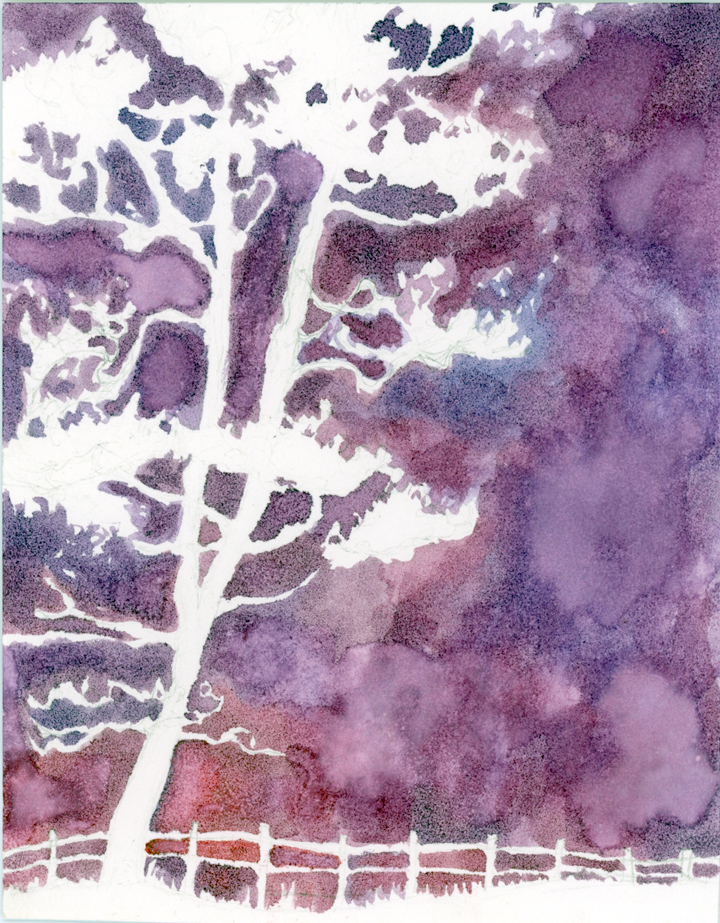
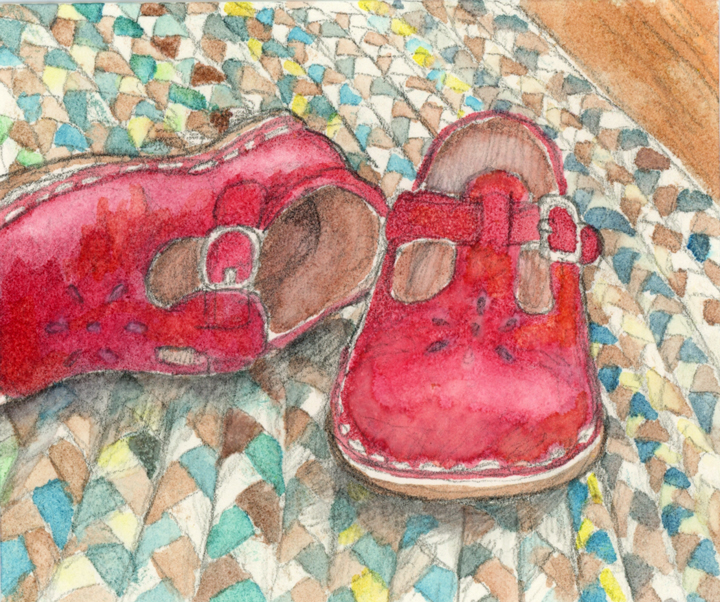
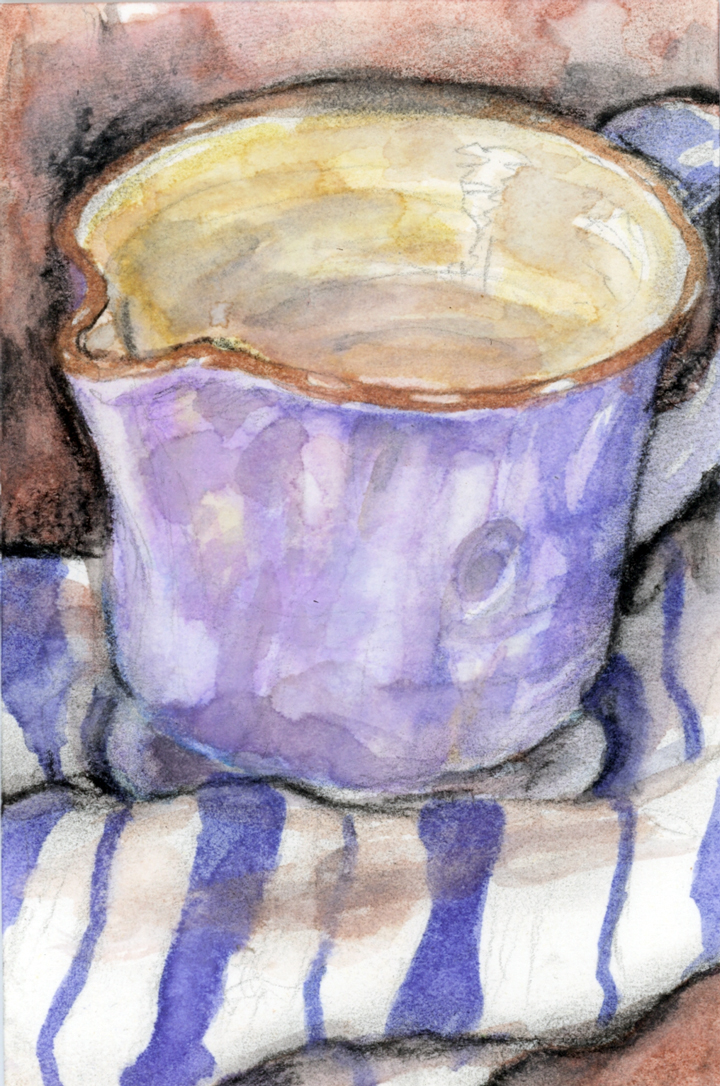
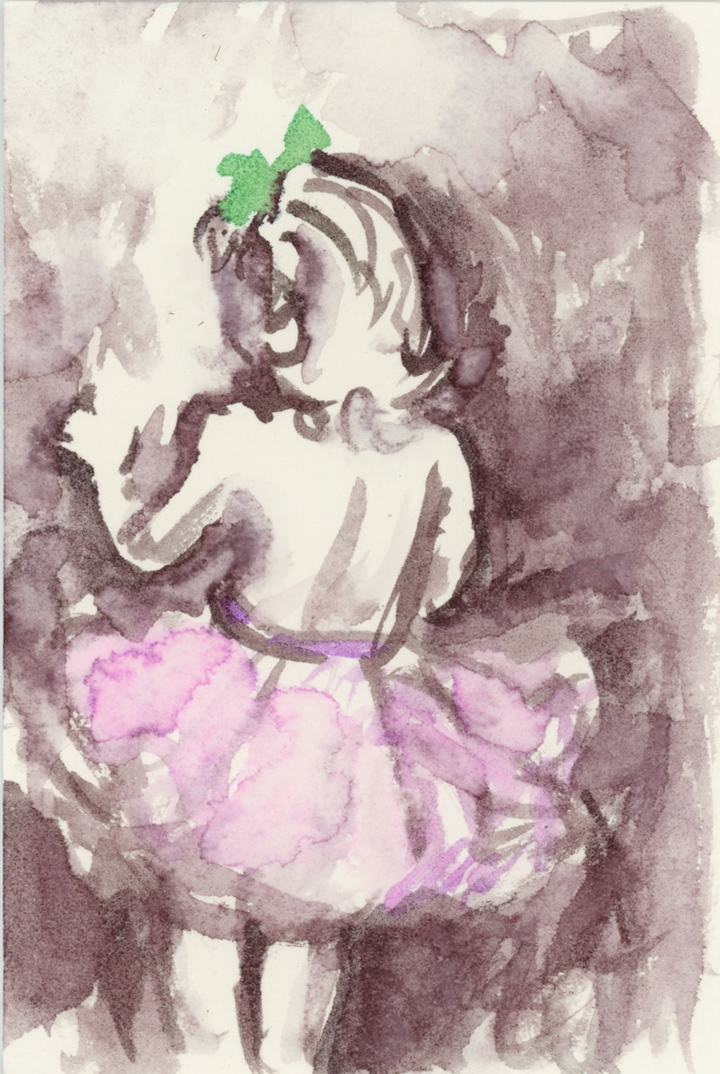
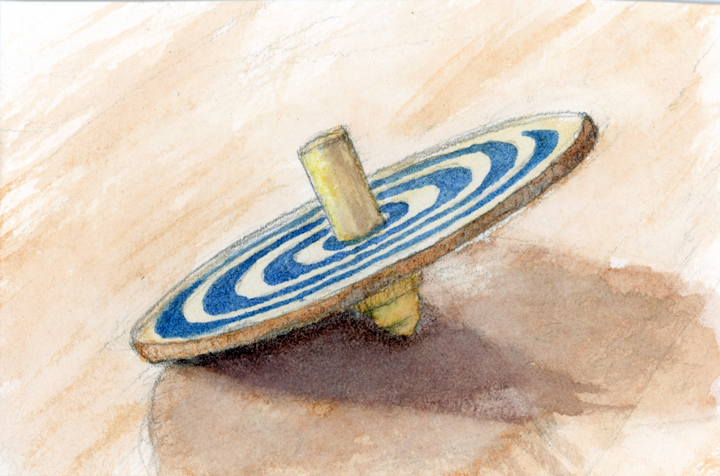
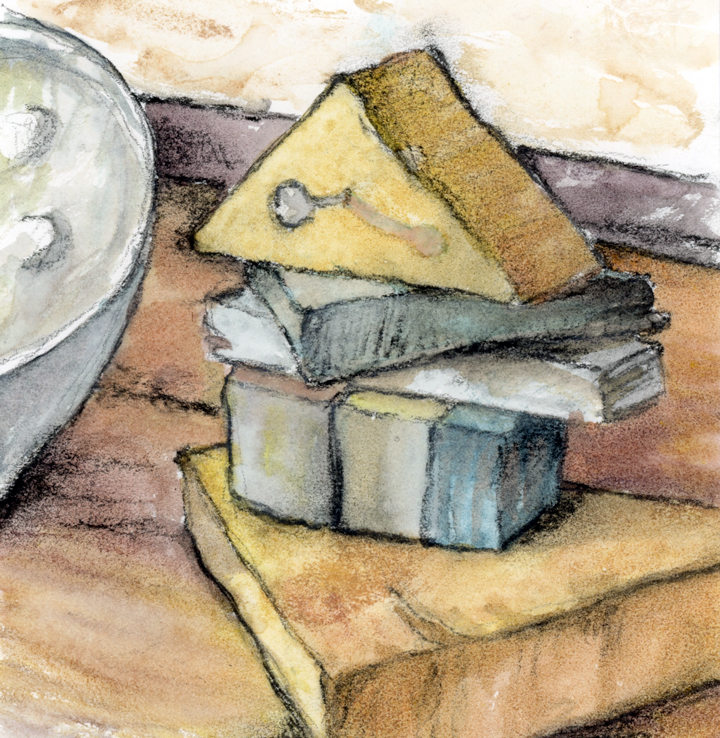
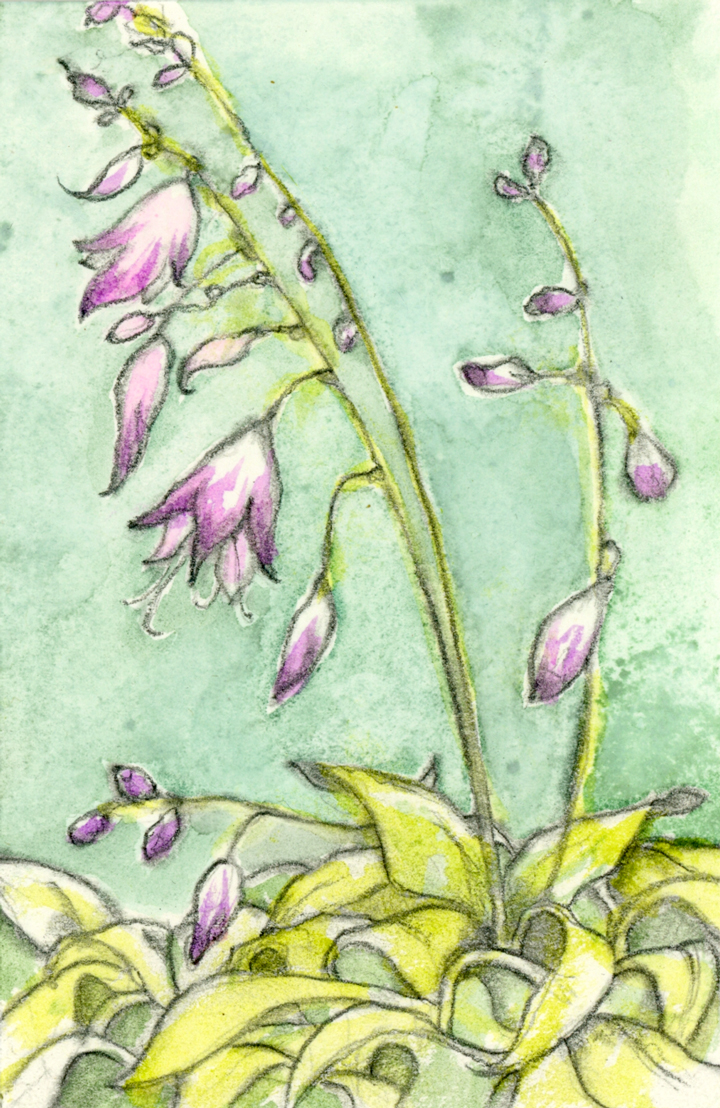
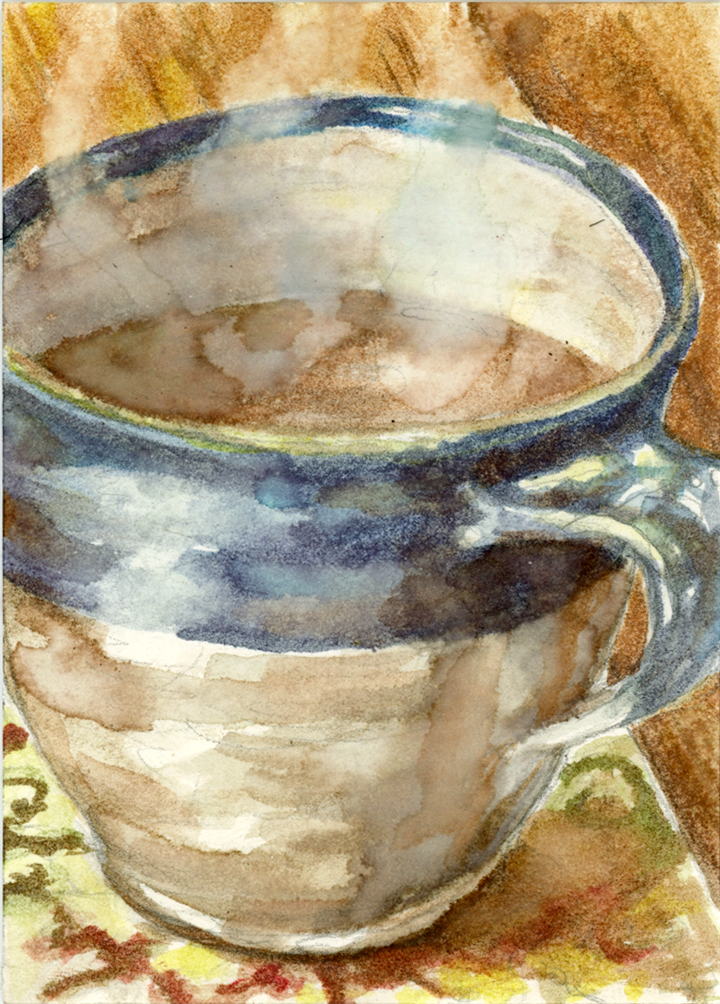
Petite Painting Project, month 1
I’m still searching for the link between these little projects and what it is that I do as an illustrator for children, but also remembering not to have anxiety about it. The answer will come over time. And this is about time and growth. These little paintings are simply a way for me to step outside my usual process and subject matter and look at the world around me. It’s a nice break from coming up with entirely imagined original illustrations. Miniature beauty and sweet compositions lie around me every day. I just have to open my mind to see them.
There are plenty of resources out there about how to put a price tag on our work. Some metric is lying around out there that perfectly calculates time spent on a project, education and training, taxes (eek!), and just good old fashioned supply and demand (although the truth is, as illustrators, we all offer something completely unique that cannot be imitated, right? Well, at least that’s the life-long goal)
But that’s not the question I’m asking.
I want something a little more intangible, but a lot more valuable. I want something that I will live off of the rest of my life (that’s not imprinted with past presidents) I want learn something about myself and about my craft. I want to be charged creatively, and desire to go to work each day. I want to WANT to wake up early and stay up late getting it right. I want inspiration and challenge. I want to dive into the deeper recesses of myself and find a way to put a little part of my heart on to that paper that will be here (hopefully) long after I’m gone.
Is that too much to ask of a client? Of course. But it is not too much to ask of myself.
Whatever the task, it is up to us as illustrators to discover something new about ourselves and our work, our process, our creative energy. It is up to us to generate or seek out the source of inspiration for our projects.What can I learn from this experience? How can I grow as an artist? What would make this project creatively challenging for me? How can I learn to increase quality and decrease time spent, therefore being more EFFICIENT? When do I work best? When should I stop and rest? The path to this creative balance or nirvana, is loaded with questions. Questions that need to be explored, not necessarily answered once- but over and over again.
Promo note: visit Diandra Mae fellow SCBWI member and illustrator. Her blog hosts “Sweet Squares”, a daily practice activity challenge similar to P3. I love it!
I have a new favorite book: Still Life with Oysters and Lemonby Mark Doty. Saying that this is my favorite book right now does not do justice to the experience I’ve had with this book, particularly at the timing of when I read it, which happened to be last weekend. Isn’t that a large part of what makes a book so meaningful to us – the timing they enter our lives? Although I just recently read this book, it actually came to me almost a year earlier. In the fall of 2011, I attended the SCBWI Carolinas conference and met illustrator David Diaz, who was guest faculty providing intensives and portfolio reviews. In the midst of discussing my portfolio, he told me about a mentorship program that had recently been established at the SCBWI national conferences, and graciously invited me and fellow SCBWI Carolinas member and ARA, Bonnie Adamson, to join them for a weekend intensive the following month in his hometown of Carlsbad, California (which I might add -like most places in California- is full of beauty, to this east coast native) My favorite question is “What was the last book you read?” So I asked this of David, and he handed me Still Life with Oysters and Lemon. On the plane trip home I started the first few pages and quickly realized that this little book’s size was deceiving. It was intense and required more from me than I had after a weekend of non-stop discussion on the illustration and art-making process. So when I returned home, I placed it on the bedside dresser drawer with the mental “to read next” note. There it remained for two and a half seasons.
Fast forward to this summer: While packing to attend the SCBWI National Conference in LA, and it occurred to me that this book still sat in the drawer. It of course should rightfully be returned it to its owner, whom I would be seeing at the event. Ashamed about neglecting my homework, I gave myself one last task: READ THIS ON THE PLANE. So while I began this little book out of a mixture of obligation, guilt, but also the genuine desire to get my head into a place of reflective preparedness for the weekend, Doty’s prose wrapped itself around me I received every drop like a warm sponge. What begins as a moment in a museum, where the author is captivated by a particular painting by Jan Davidsz de Heem (Still Life with Oysters and Lemon) becomes a philosophical journey into the intimacy we share with objects, the permanence and impermanence of earthly pleasures. By exploring the dutch masters of still life painting, Doty captures the essence of why we are drawn to still life. At one point he refers on the painters love affair with light – and ultimately, that all painting starts with love. That stuck with me, particularly in light of the many notes I heard at the conference that weekend.
There was much talk of love inside of our work, whether that be as a writer or an illustrator. EB Lewis told us to bring to the table ourselves – our own souls and experiences, what we LOVE. Draw what you love and what you know. During his breakout session, he offered a short documentary by National Geographic photographer Dewitt Jones, in which the prevailing mesaage was about how to recognize the beauty around us. The extraordinary lives in the ordinary. “By celebrating what is right with the world, we are given the energy to fix what is wrong.” Author Ruta Sepetys asked us, “What are you willing to give in order to create? What are you longing for? What do you hide?” If we are bold enough to lay bare our broken selves, then “the wind will blow through our hollow places, and someday may cool and heal a reader.” So much courage is needed to expose love and fear in order to create, but without, I’m not sure we can be successful in connecting with our listeners, our viewers. As the final keynote speaker, Gary Schmidt instilled in us this most important lesson: You will never learn to love art well until you learn to love what art mirrors better….the world. Love the world.
While travelling last weekend, I received the call that my grandmother had died. What remains?
Permanence. Impermanence. Love and objects.
It is really hard to have patience when trying to capture foliage. There so much out there with such variety of distinct personalities that if that is the only subject you focused on, you would have enough work to tackle over the course of multiple lifetimes.
I didn’t really have the patience this morning with it, but I showed up. Maybe I’ll try again tomorrow…
Ok, before I go any further I must step back a bit and talk about process. My process came about due to necessity rather than by an artistic decision. I was asked to illustrate a book while I was in the midst of moving. And I had a two year old. So I really didn’t want to dive into alot of materials that would be smelly, messy, and potentially eaten or destroyed by curious little hands. Not to mention there was little living space to provide for any fancy studio set-up, and the living space I did have was slowly being taken up my moving boxes.
So I started looking into how the computer could work for me. It seemed like the best solution to my circumstance. It’s clean. There’s no long set-up time. I can leave a file open and come and go all day, working for five minutes at a time if need be, in the middle of mommy-hood duties. I contemplated over using the computer for the work. The purist that I am kept accusing me of cheating. But I came to realize that the final product is a digital file anyway. This is not art that will hang in a gallery or on someone’s walls. It is MEANT to be viewed in reproduction, as essentially a digital image. This way, I actually have more control over the final product, instead of sending off priceless hours of original work, then hoping the production photographer/scanner will do justice to the colors. I still agonize over color, but that’s another story.
I came across a wonderful find: “Illustrations with Photoshop: A Designer’s Notebook” published by O’Reilly Media. Documented by fantastic collection of illustrators, this compilation of journals was my answer (and still is). I have adopted (and adapted somewhat) the technique used by Nicolas Fructus. You can find his journal of the process in the book on page 39, I’ll give you my version here. To be continued….