We’ve been talking a lot about personal space this year….6 feet apart, quarantine, masks, face shields. How physically close do we need to be to feel connected? How much physical distance does it take before we start feeling alone and isolated?
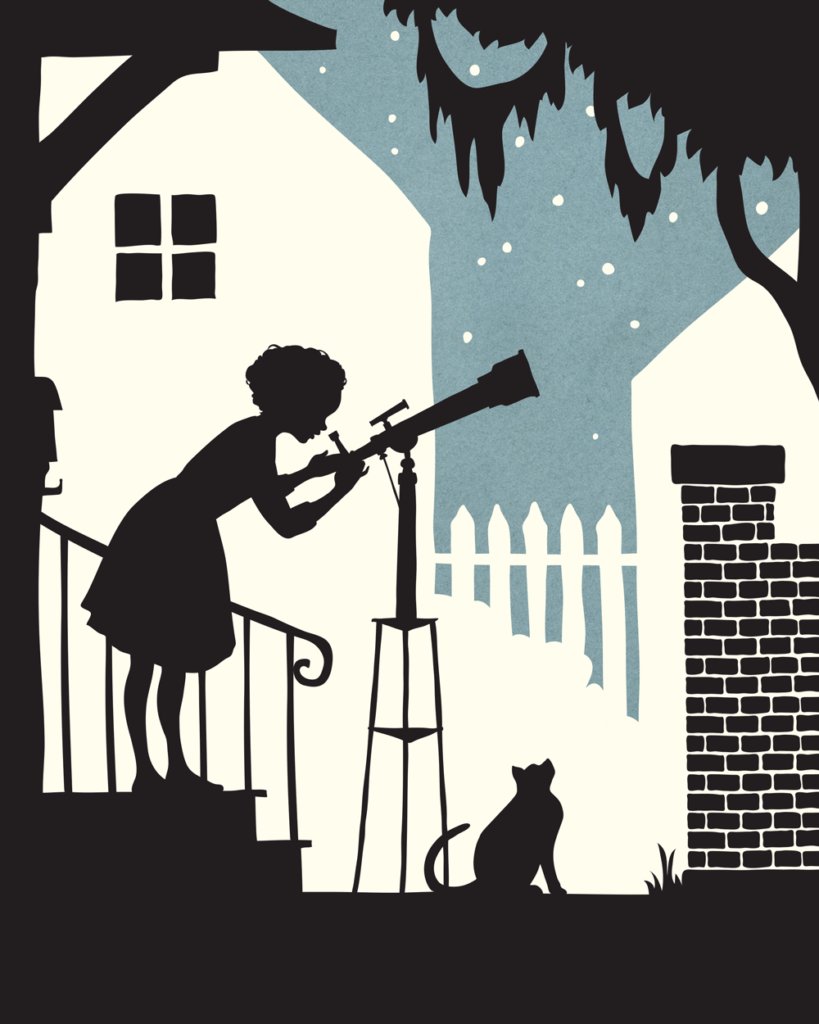
It’s kind of fitting this piece is called “Space.” A silhouette drawing is mainly about space. The positive space, the negative space, how our brains sort out that space when color is added as a third component to the black and white. Whenever I create any illustration I think of the space in terms of threes (fore-ground, middle-ground, back-ground). These elements are primarily connected to my roots in the theatre (downstage, centerstage, upstage). I think of prosceniums, layers of objects lying in space like a pop-up book, giving us the illusion of distance, when we do not have the reality of that distance.
When silhouetting in only black (using the white space as the negative space) there is only upstage and downstage – no middle-ground, or centerstage. It is only about the subjects, the action. But in adding a third color, you can add a third space.
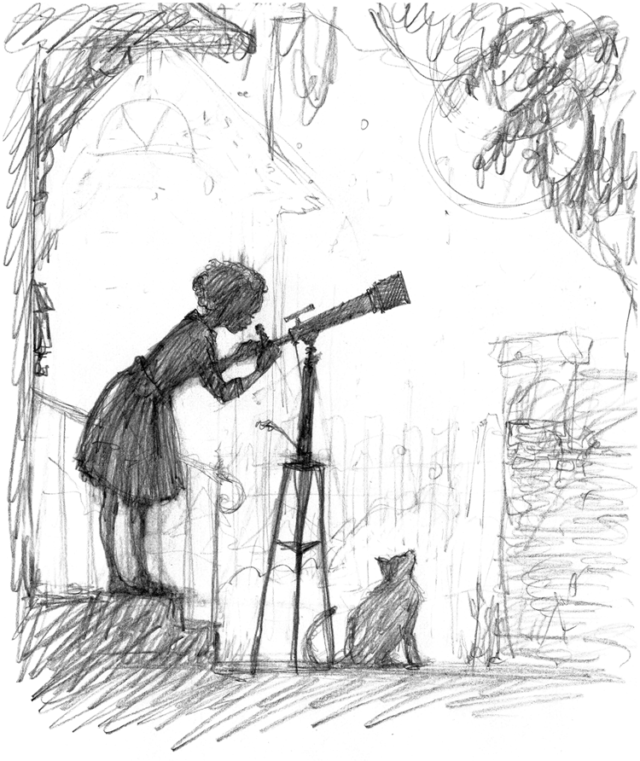
1. Black/darkest color should always be the foreground – the main subject, and where the action lies. I start here first with a sketch:
“Space” preliminary sketch – pencil on multipurpose printer paper. This was created quickly in one sitting (about 30 min)
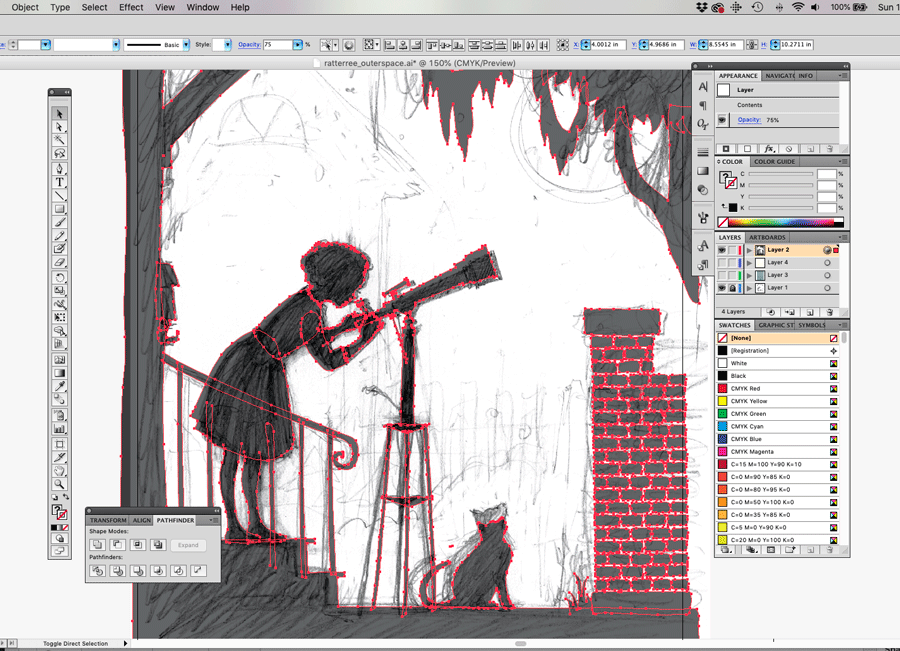
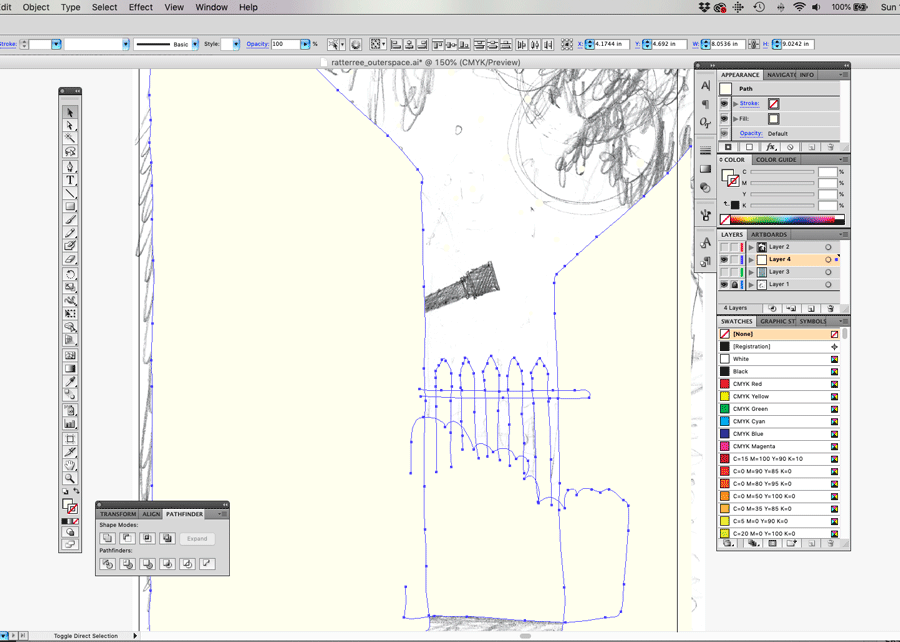
2. While I had a general idea of the middle and background information, I needed to first formalize the main drawing first. I achieved the smooth solid black color by importing into Adobe Illustrator and tracing my sketch as solid objects:
Setting the opacity to about 75% helps when tracing in illustrator. During this phase I am still making modifications to the original drawing (such as the size of the cat, the tilt of the telescope, etc.)
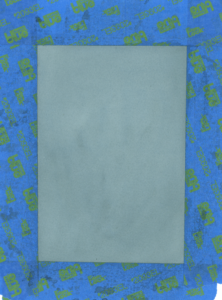
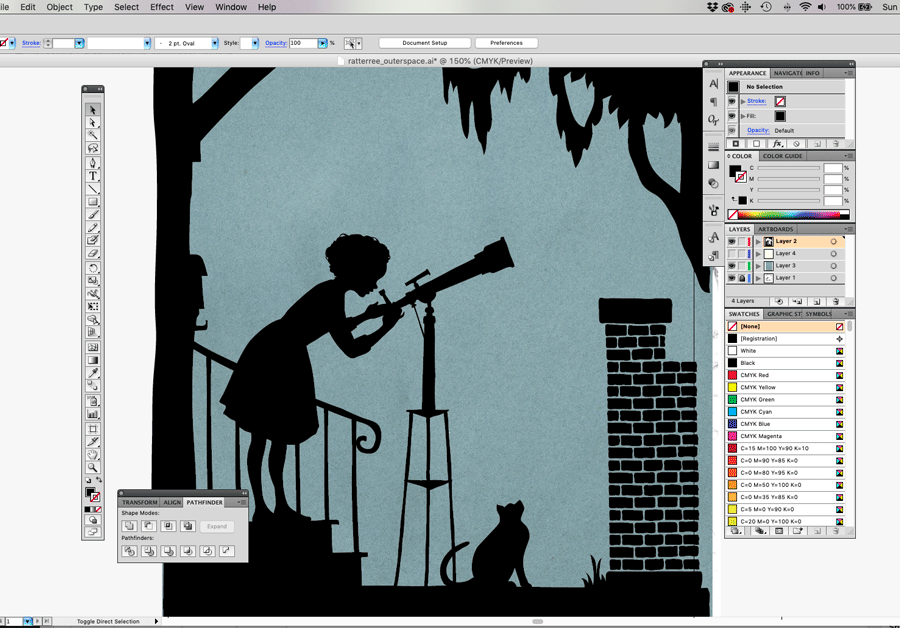
3. Once I have the main drawing set, I start adding the space behind her. Beginning with the farthest distance first, which I knew I wanted to be a deep blue color (but it couldn’t be too deep and compete with the silhouette). I had a small swatch of watercolor-painted paper in my studio that I scanned (I like to keep a few of these on hand in my work space. You never know when they will come in handy!)
(Here’s a snapshot of the scanned watercolor wash I used as the background night sky layer)
I am now able to abandon the sketch and advance the drawing within Illustrator. But at this point, it still doesn’t tell enough of a story. It needs more environment and atmosphere, and therefore I need to add in another layer of space using white. This gets tricky since in silhouette, white recedes, but since this is a night image, reversing this concept could help communicate the time of day.
4. I return to my original drawing layer and work only on the middleground as a new layer (I disable the other layers so I can focus only on the houses)
Toning down the starkness of the white helped me not only to see what I was doing, but it also softens the final image.
5. The final touch: adding the window was the final element that brought it all together. Even though the squares are black (like the fore-ground) they still seem to recede and stay a part of the middle-ground. Don’t ask me the science behind that – there certainly are others much more qualified than I who can explain it, but I’ll use it.
Have fun playing around with color this week, and discovering how it creates space. Share your experience with me on Instagram by tagging @aliceratterree
This week, I am joining an international blog hop. So what ever is a blog hop anyway? you might ask….It’s is a way of blogging in which one blogger introduces a topic of conversation and then invites another to continue the conversation the following week on their own blog, who then in turn invites someone to post the next week after that (and so on and so on). In addition to allowing readers and participants to engage in an ongoing conversation centered on a common theme, it also connects people together who may not have otherwise known each other.
For this particular hop, we’ve all been asked the following questions: 1) What are you working on? 2) How does your work differ from others in it’s genre? 3) Why do you write/create what you do? 4) How does your process work?
So hop on board and let me escort you along this week!
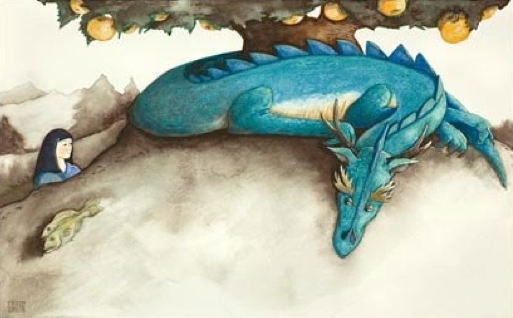
First, I must start by introducing the artist who invited me to join, Susan Sorrell Hill. Susan’s work immediately stole my heart. A kindred spirit in the realm of the faerie tale, she easily embraces other worlds – delivering them with majestic understated grace – and makes them believable. I can’t wait to see her story “The Emperor’s Pear Tree” (isn’t that a magical title) in print someday. Here’s a sneak peek image from it:
Last week, Susan answered these questions in her “Around the World” blog post. And if you have the chance, follow the trail back – you’ll find some tasty creative treats to nibble on! (I must be getting my appetite ready for the holidays)
What are you working on?
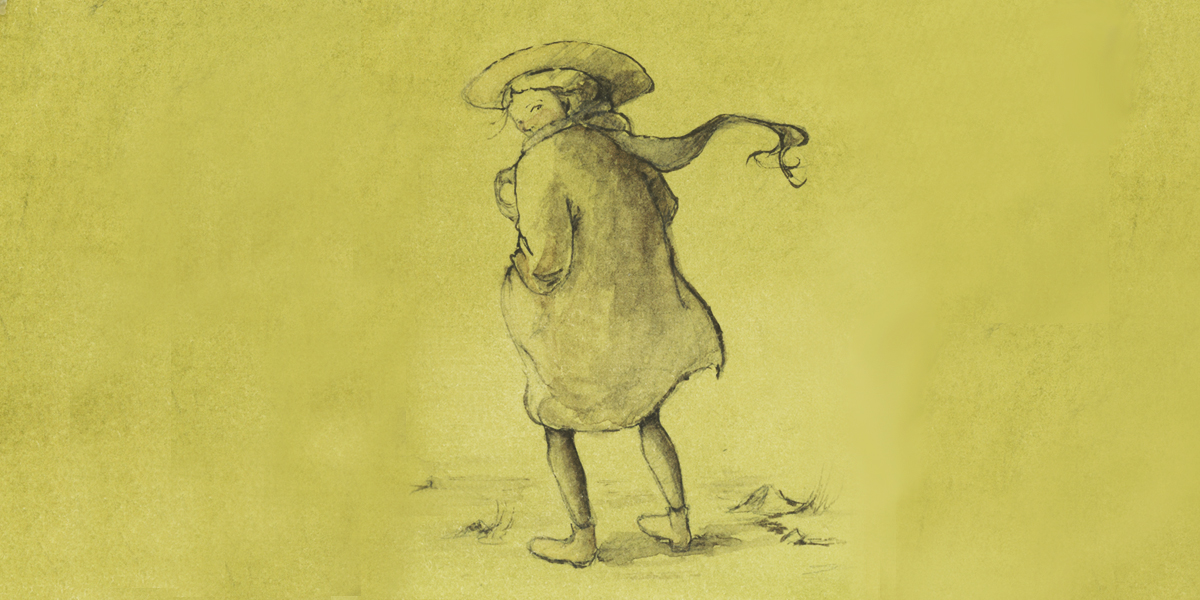
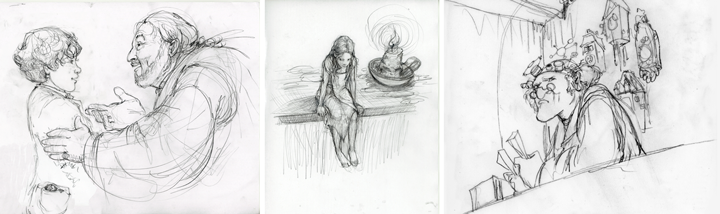
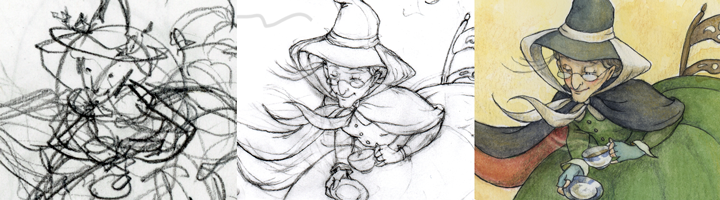
My primary job these days is illustrating a middle grade novel entitled “Lilliput” (by Sam Gayton) which will be published here in the US by Peachtree Publishers (due to be on the shelves in the fall of next year) The moment I read the manuscript, I knew it was for me – it’s rich with London rooftops, buckled shoes, thimbles, maps, and even a mad clockmaker! Here are some of my early character sketches….
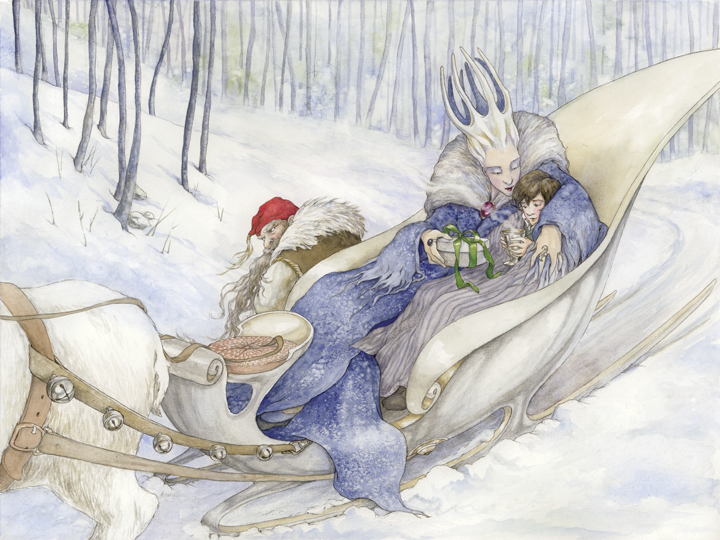
If I can carve out extra time, it’s nice to balance the work at hand with personal exploration. One of my favorite series is the Narnia Chronicles and so recently I tackled a scene from it using a set of Copic pens I wanted to test out.
Along the topic, I recently signed with agent Marietta B. Zacker of the Nancy Gallt Literary Agency. Since the partnership will allow me to shift more of my focus to working in the studio, I’m anticipating a very fun and productive year ahead!
How does your work differ from others in it’s genre?
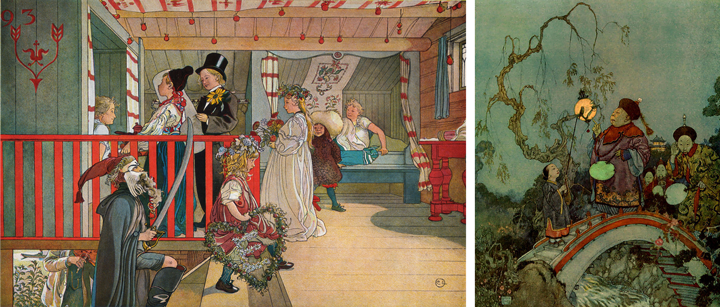
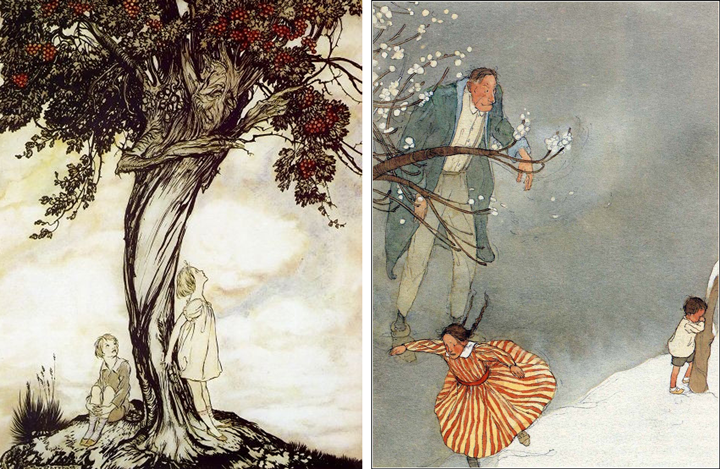
A big question, and one that I wish I could answer easily. What I can talk about, though, is how I fit into a history of artists. All artists align themselves with a certain lineage of other artists who have influenced them. Recognizing which family of artists you belong to is an important part of understanding art making and finding your own process. I’ve always felt a strong kinship with the “Golden Age” of children’s book illustration, a movement that began with George Cruikshank in the early part of the 19th century. It flourished into the recognition of artists such as John Tenniel (famous for his Alice in Wonderland illustrations), Randolph Caldecott (after whom the prestigious award is named) and Kate Greenaway (undoubtedly a master of nursery rhyme books). I’ve also been a big fan of the poster art and line work of Alphonse Mucha. Other favorites of mine: Carl Larsson (such perfectly balanced composition), Edmund Dulac (color, color, color), Arthur Rackham (ah, what glorious trees), and the more contemporary Lisbeth Zwerger (check out how she masterfully utilizes empty space).
L: Carl Larsson, R: Edmund DulacL: Arthur Rackham, R: Lisbeth Zwerger
Why do you write/create what you do?
WHY aligns with a set of values. It is personal and will be different for everyone. I wrote a blog post (The most important question illustrators need to answer) that passes along a concept created by Simon Sinek called the Golden Circle. I strongly recommend visiting his site where you can learn more about how to find your “WHY.” Tony DiTerlizzi, in one of his SCBWI keynote speeches, “Never Abandon Imagination” (a phrase that sums up his own “why” and also serves as the masthead for his site) discussed the importance of finding what used to make you excited as a child – what motivated you to start creating. This part of us has nothing to do with the desire to generate income or be recognized.
Everyone must take time every day to leave reality behind and entertain the possibility of the extraordinary. Faeries do exist. Narnia is just a walk through a wardrobe, or perhaps just around the corner. You can fall through a rabbit hole and end up in a world where the illogical reigns over logic. Magic can be harnessed. The grotesque can be beautiful. Stories provide a playground where we can ponder truth and discover our own values, while also discovering what we share in common with one another. Where no one is alone.
How does your process work?
My process is straightforward: Thumbnail to finished drawing, transfer to watercolor paper, paint. The detailed blog post about it is recorded in my journals here (Illustrating Mother Goose)
@Alice Ratterree on process
If I want a more glossy look, sometimes I import a finished painting into Photoshop and add more paint digitally – it just depends on the piece and what its final use will be. I would not call myself a painter. Rather, it seems better to say that I create painted drawings. First and foremost to me is the integrity of the drawing itself. This makes the issue of transferring a bit terrifying because no matter how well you trace an image with a light box, you will always end up with an entirely different drawing. Sometimes it benefits to have the spontaneity that comes from a traced transfer, but most of the time I like to prepare a drawing that can be output to watercolor paper. I work with a local printer, George Lee, who produces prints for me onto my own paper. In addition to having a state-of-the-art printing system that houses waterproof inks, George is extremely attentive to detail and is always willing to go the extra mile to make sure the product he delivers is flawless. He also makes beautiful fine art prints of finished pieces!
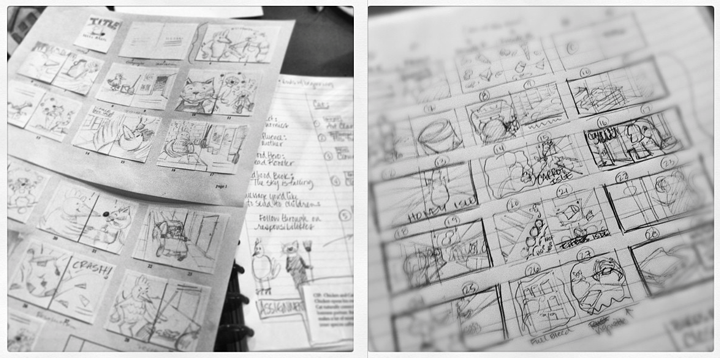
So without further ado, I pass the torch over to Kelli Thrasher-Books, whom I had the privilege of meeting at last year’s Highlights Advanced Illustrator Workshop(an event I recommend to all aspiring illustrators) In addition to being an illustrator, Kelli has also spent many years working as a graphic designer and I’m really looking forward to hearing what she adds to the conversation about her process! I particularly love these images she has documented of her storyboarding work.
So you’re going to illustrate a children’s book. Congratulations!
Before you grab a brush and start on a piece of finished art, a few decisions must be made. To name a handful : how many pages/spreads there are, where the type needs to be placed (this may be flexible), color or black and white, spot illustrations (small drawings that stand alone, with minimal or no background elements) or full bleed illustrations (meaning the entire page is covered to the edge) and most importantly, the dimensions of the book- thus directing the dimensions of the illustrations, which will ultimately help when you create the composition. Luckily you do not have to bear the burden of making all of these decisions alone. The Publisher will (most likely) provide the answers to most these questions for you, and if not, make sure you come to an agreement together so there are no surprises after you have put in the hours.
Size
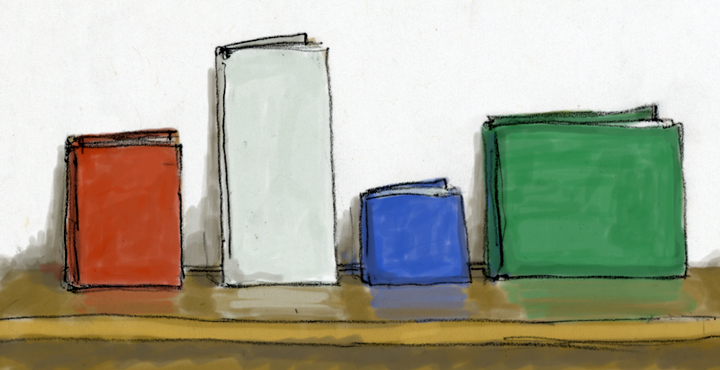
Sizes vary in the industry and thankfully the publisher will inform you of the size of the book or provide a choice of options for you to consider. You don’t have to work at 100% scale, and many times should not. Take a look at any juvenile book cover. Many of those are printed around 6″x8″ or smaller. Who wants to (and can successfully) work at that scale? Picture books have a larger standard (in the ballpark around 8×8, 8×10, 9×11…) but there are still benefits to working larger than the final print size. For one, you enjoy more freedom to experiment with various mediums. Secondly, when a final illustration is scaled down, a certain magic happens in which details become a little more crisp, edges sharpen up a bit, and I’ve even found that color intensifies.
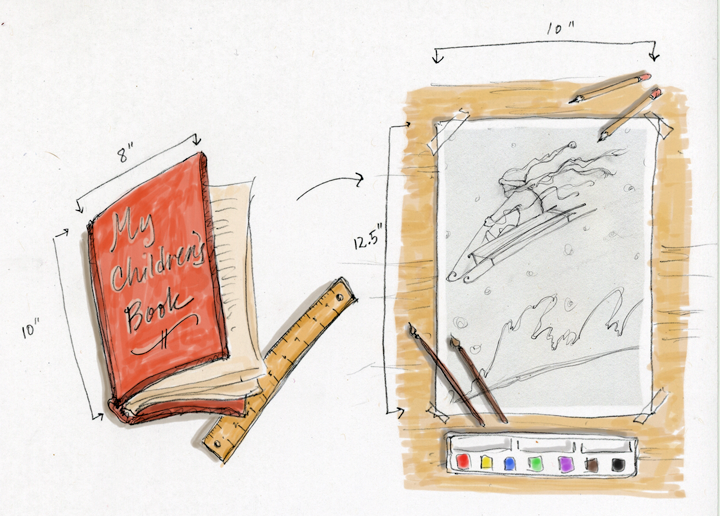
The most important thing to consider is maintaining proportion. For example, an 8″x10″ book proportionally increased by 25% would be 10″x12.5″ Never work smaller than the finished size, or you will loose image quality when you enlarge the image to fit the page. Also, try not to get too large either, or detail becomes lost when grossly scaled down. The trick is finding what percentage increase works with your work medium and style.
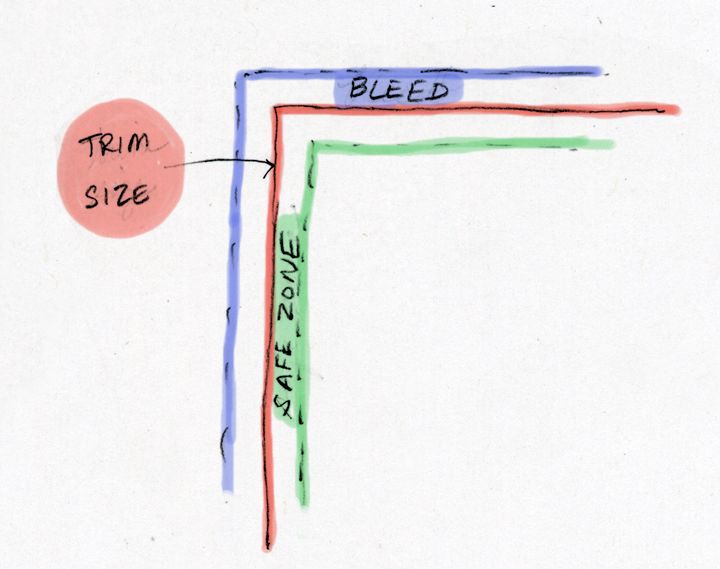
Remember to include a bleed of at least 1/4 inch. (This is the part of the illustration that runs off the edge of the page) So for the example mentioned, the 8″x10″ book illustrated at 10″x12.15″ would have an extra 1/4″ added around for the bleed, making the drawing 10.25″x12.75″ In addition, make sure to leave a safe zone (an area free of your main action) of about 1/4″ inside the trim area.
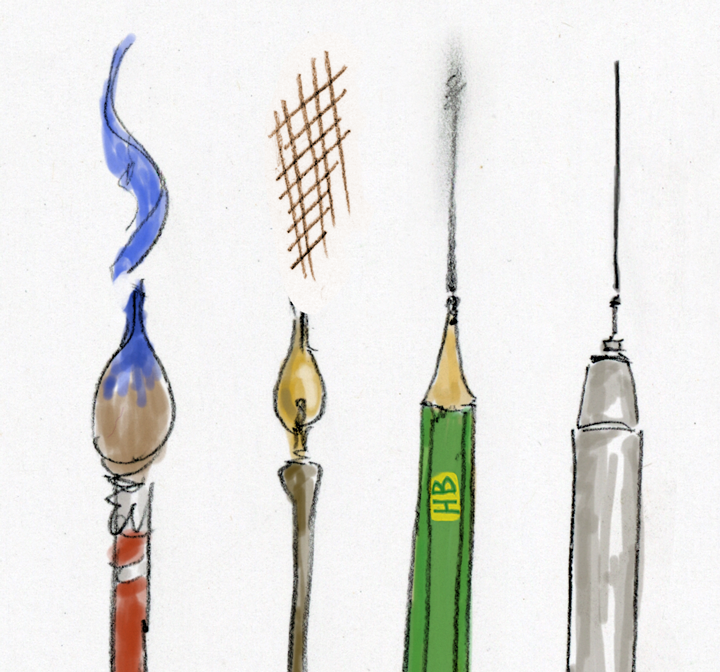
Medium? Type of Paper? That is up to you. However, the reason to address this decision is because it does have a relationship with the size of your work. For example, if you love cross-hatch work with a crow quill pen, that works great for smaller, more detailed drawings, but if you prefer a large round brush and acrylics, you will need larger surfaces. The key is to find your own “sweet spot” between your preferred media and the size of your work.