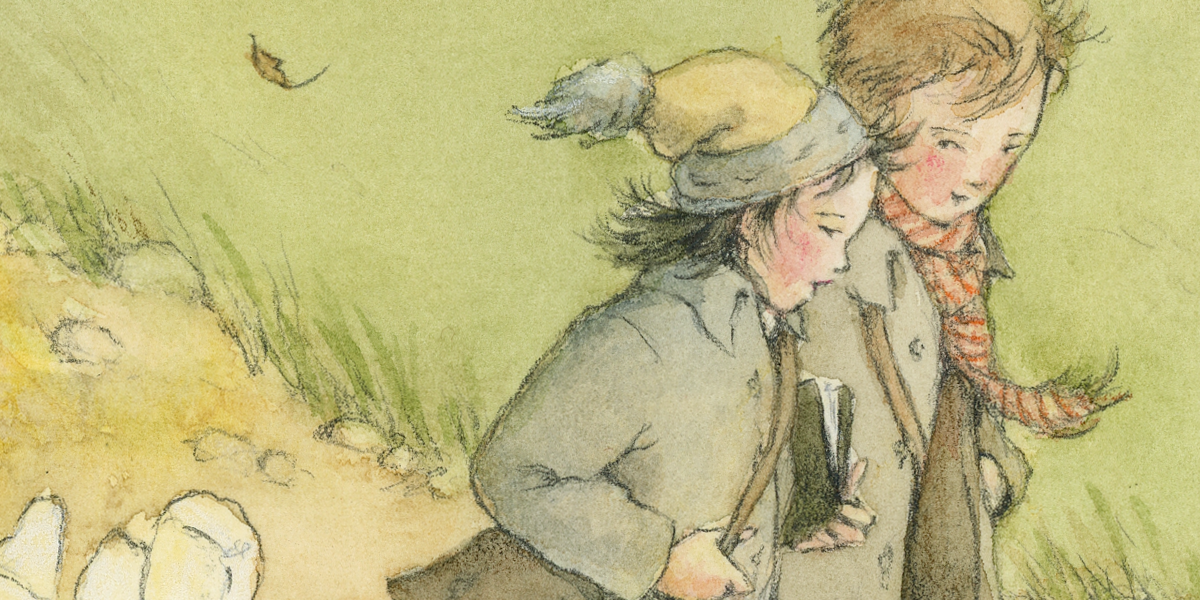
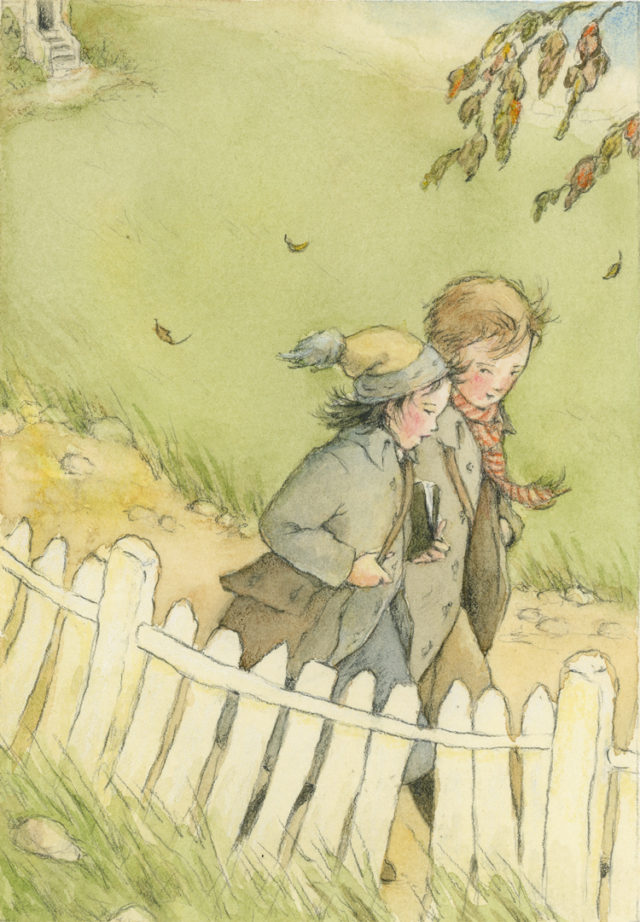
The idea of students walking to school probably brings into mind the old cliché stories of our grandparents – “When I was your age, I used to walk 5 miles to school in the snow!” (That gap between home and school proudly growing larger each time the tale is delivered) We may also regard walking to school as something archaic and “old fashioned” (imagine Laura and Mary Ingles trotting down a sun-dappled dirt path swinging books neatly buckled with a leather strap).
I myself never walked to school. Carpooling in a large station wagon was how my friends and I got around. Then about ten years ago I moved to Greenville to a neighborhood with an elementary school nestled only two blocks away. On the first day of my son’s first grade year, we walked.
We saw a bunny.
We listened to birds.
Watched the way the leaves changed color throughout the year.
We talked to other kids, other parents.
Strangers became friends.
My children are older now, but I still see others buddying up and walking up that hill, their crowns sweetly tilted inward as they talk. I’m confident they will have much better stories to tell about walking to school when they are grandparents.
Happy Earth Day.
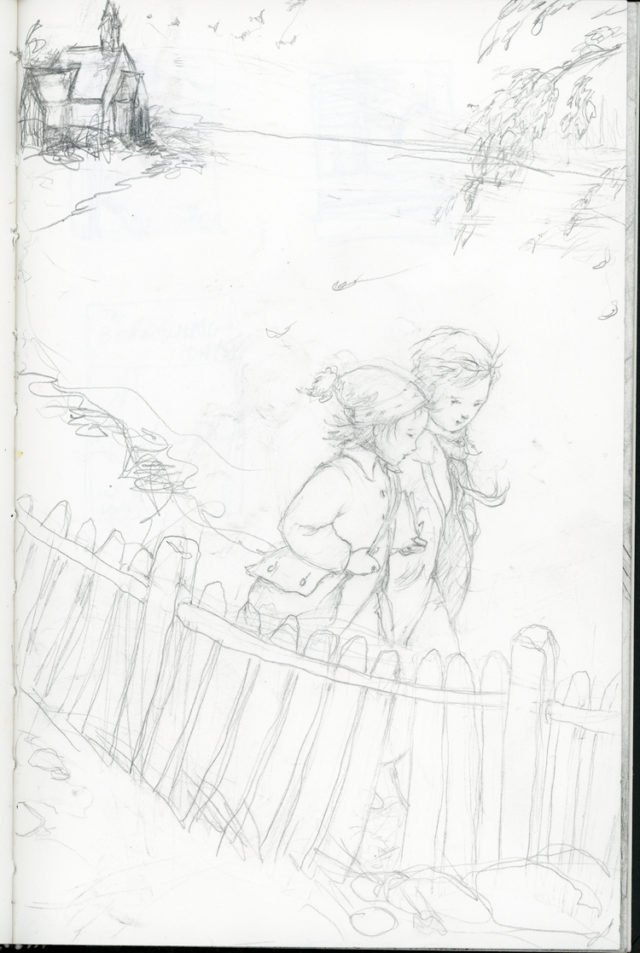
In this painting, I drew inspiration from this life memory….it starts with the sketchbook:
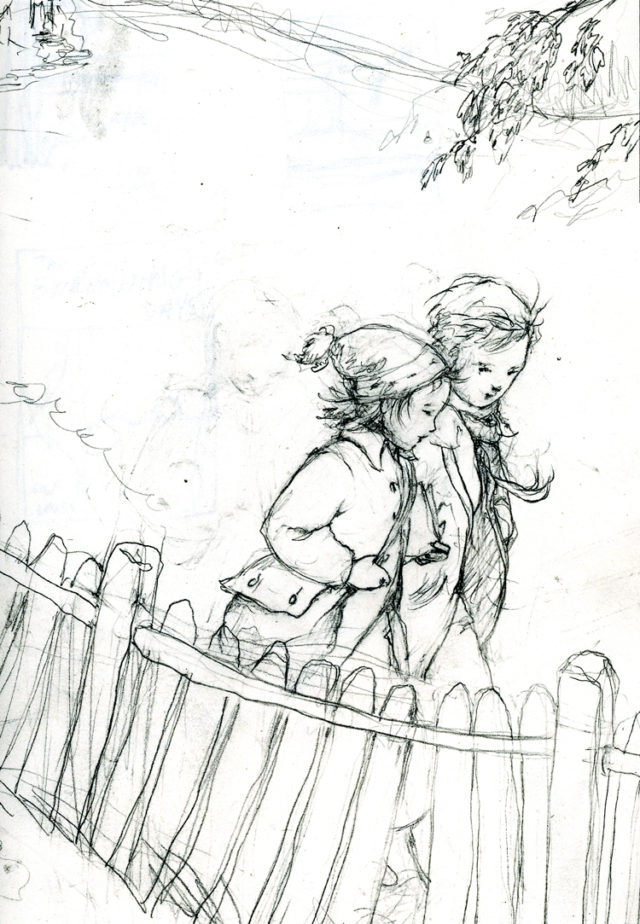
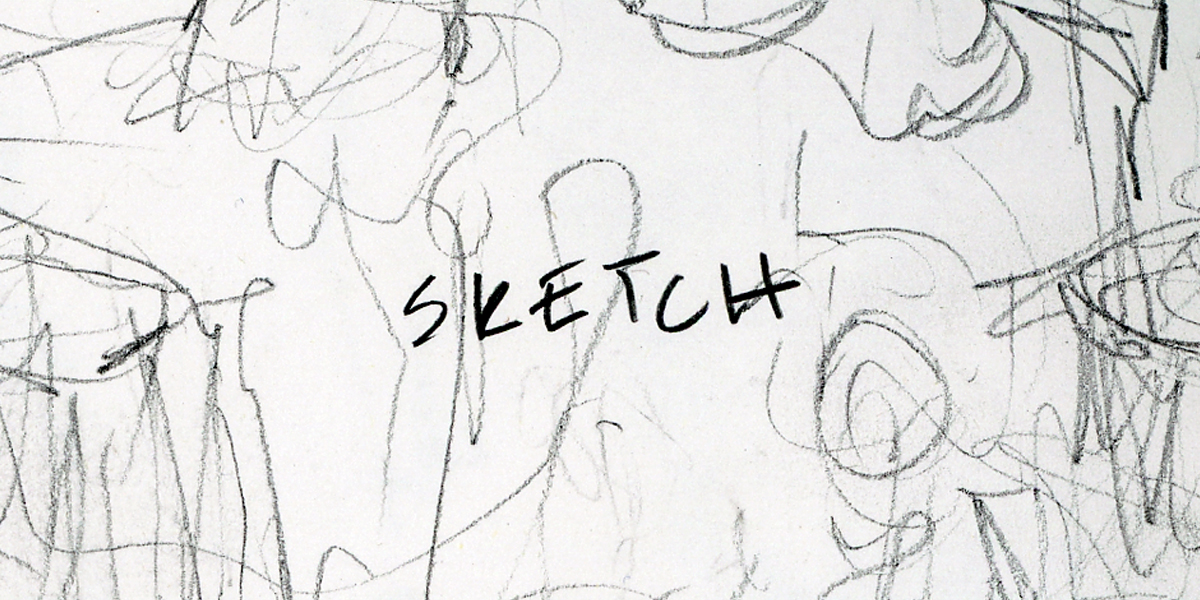
Sketchbook page (Usually worked on in the carpool line of my daughter’s after-school program)The sketch is scanned and cropped, then levels intensified (in Photoshop) for better visibility when transferring. I then print this out.
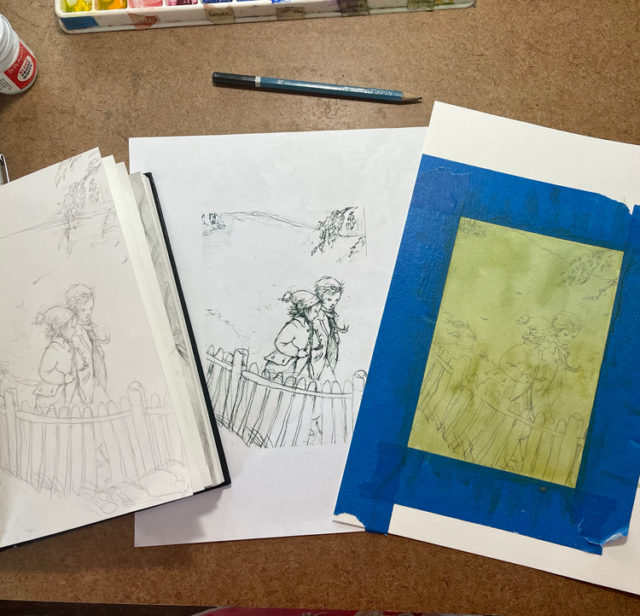
I use an Artograph Light Pad I bought from Michaels (if you pay attention to the coupon savings, you can get these for half the cost!) Place the printed copy of the sketch onto the light pad, and watercolor paper on top. Then trace for a fresh drawing. (Side note: I love listening to podcasts during this phase. One of my very favorites: 99% invisible from Radiotopia. If you haven’t heard of it, carve out 20 minutes today to start enjoying. Hours of discovery awaits you! You can also browse other amazing Radiotopia shows like Criminal, and The Truth)
The art table at a glance…
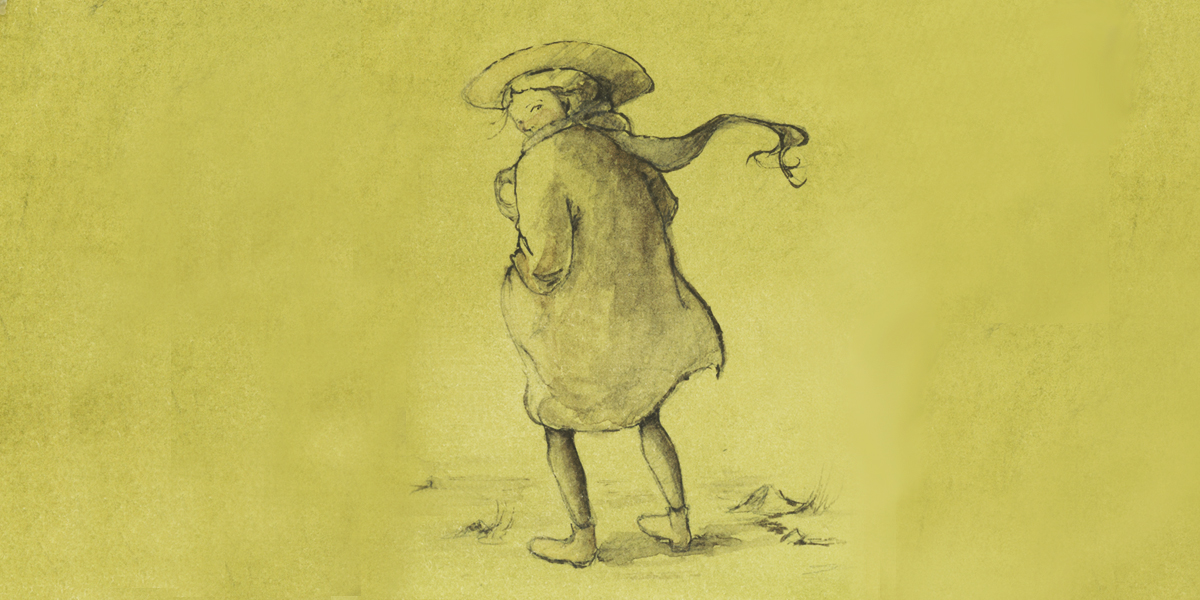
The process… *note: the watercolor paper washed in green was a first pass/practice on a monochrome surface (I usually keep test washes laying around and draw/paint on top of them for fun) I repeated the process with a clean piece of watercolor paper and added color (see final below)
Then begins the really fun part: bringing it to life with more definition and color….
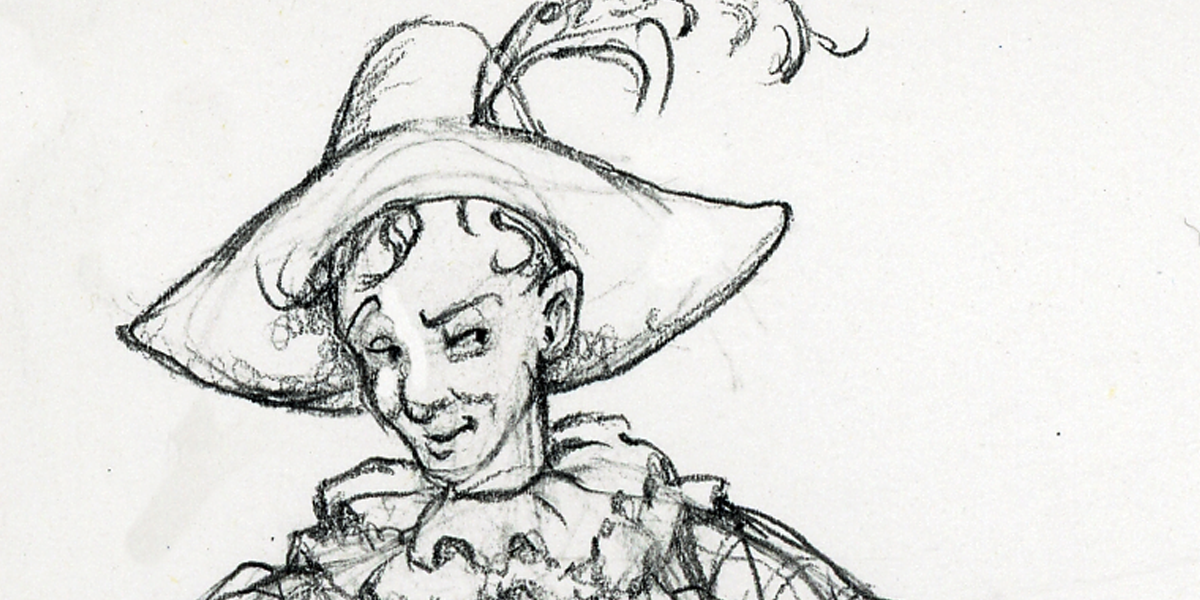
Diving into Commedia dell’arte character studies…Harlequin, or Arlecchino (Italian) was a very popular stock character in the zanni category. Zanni were typically a pair of servants to an upperclass couple. Arlecchino is known for his wit, physical agility and a cunning ability to outsmart his master.
This week, I am joining an international blog hop. So what ever is a blog hop anyway? you might ask….It’s is a way of blogging in which one blogger introduces a topic of conversation and then invites another to continue the conversation the following week on their own blog, who then in turn invites someone to post the next week after that (and so on and so on). In addition to allowing readers and participants to engage in an ongoing conversation centered on a common theme, it also connects people together who may not have otherwise known each other.
For this particular hop, we’ve all been asked the following questions: 1) What are you working on? 2) How does your work differ from others in it’s genre? 3) Why do you write/create what you do? 4) How does your process work?
So hop on board and let me escort you along this week!
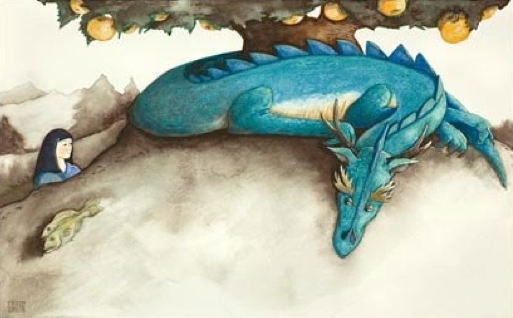
First, I must start by introducing the artist who invited me to join, Susan Sorrell Hill. Susan’s work immediately stole my heart. A kindred spirit in the realm of the faerie tale, she easily embraces other worlds – delivering them with majestic understated grace – and makes them believable. I can’t wait to see her story “The Emperor’s Pear Tree” (isn’t that a magical title) in print someday. Here’s a sneak peek image from it:
Last week, Susan answered these questions in her “Around the World” blog post. And if you have the chance, follow the trail back – you’ll find some tasty creative treats to nibble on! (I must be getting my appetite ready for the holidays)
What are you working on?
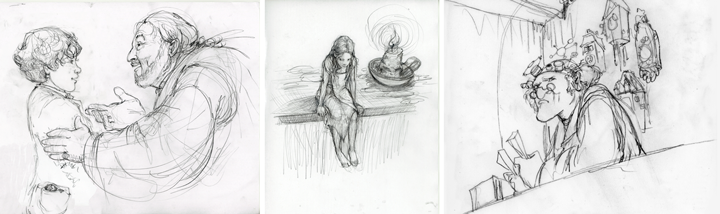
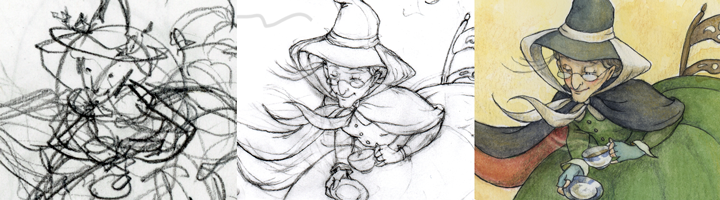
My primary job these days is illustrating a middle grade novel entitled “Lilliput” (by Sam Gayton) which will be published here in the US by Peachtree Publishers (due to be on the shelves in the fall of next year) The moment I read the manuscript, I knew it was for me – it’s rich with London rooftops, buckled shoes, thimbles, maps, and even a mad clockmaker! Here are some of my early character sketches….
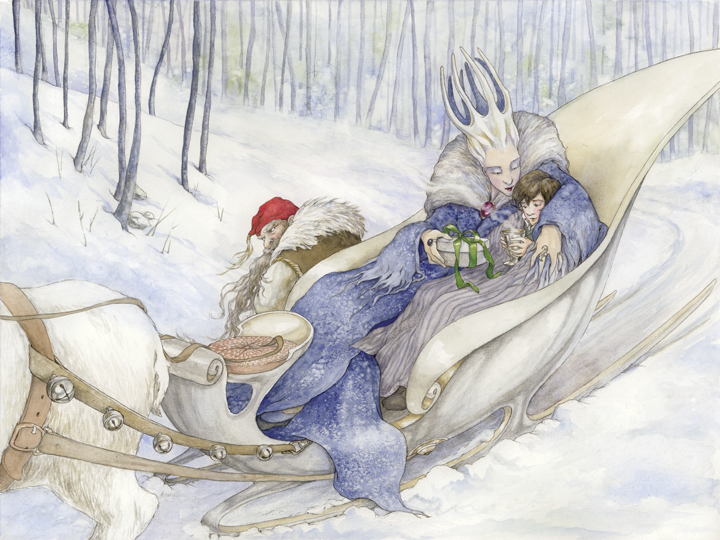
If I can carve out extra time, it’s nice to balance the work at hand with personal exploration. One of my favorite series is the Narnia Chronicles and so recently I tackled a scene from it using a set of Copic pens I wanted to test out.
Along the topic, I recently signed with agent Marietta B. Zacker of the Nancy Gallt Literary Agency. Since the partnership will allow me to shift more of my focus to working in the studio, I’m anticipating a very fun and productive year ahead!
How does your work differ from others in it’s genre?
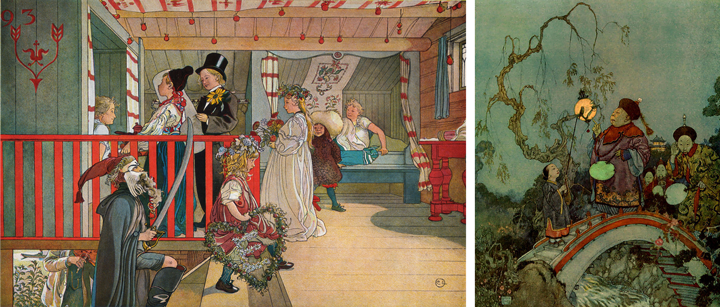
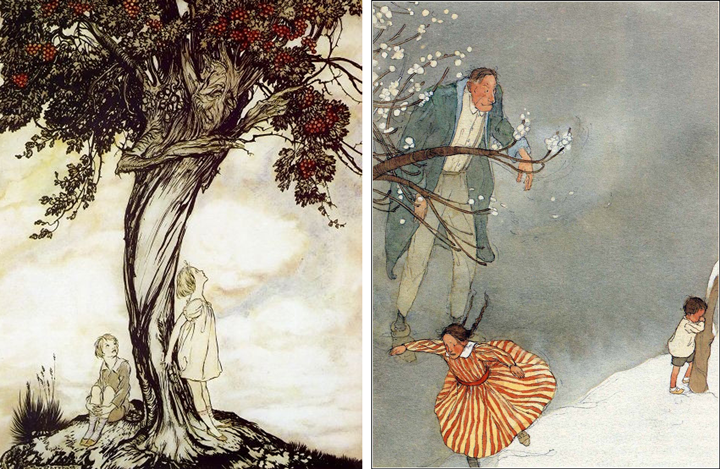
A big question, and one that I wish I could answer easily. What I can talk about, though, is how I fit into a history of artists. All artists align themselves with a certain lineage of other artists who have influenced them. Recognizing which family of artists you belong to is an important part of understanding art making and finding your own process. I’ve always felt a strong kinship with the “Golden Age” of children’s book illustration, a movement that began with George Cruikshank in the early part of the 19th century. It flourished into the recognition of artists such as John Tenniel (famous for his Alice in Wonderland illustrations), Randolph Caldecott (after whom the prestigious award is named) and Kate Greenaway (undoubtedly a master of nursery rhyme books). I’ve also been a big fan of the poster art and line work of Alphonse Mucha. Other favorites of mine: Carl Larsson (such perfectly balanced composition), Edmund Dulac (color, color, color), Arthur Rackham (ah, what glorious trees), and the more contemporary Lisbeth Zwerger (check out how she masterfully utilizes empty space).
L: Carl Larsson, R: Edmund DulacL: Arthur Rackham, R: Lisbeth Zwerger
Why do you write/create what you do?
WHY aligns with a set of values. It is personal and will be different for everyone. I wrote a blog post (The most important question illustrators need to answer) that passes along a concept created by Simon Sinek called the Golden Circle. I strongly recommend visiting his site where you can learn more about how to find your “WHY.” Tony DiTerlizzi, in one of his SCBWI keynote speeches, “Never Abandon Imagination” (a phrase that sums up his own “why” and also serves as the masthead for his site) discussed the importance of finding what used to make you excited as a child – what motivated you to start creating. This part of us has nothing to do with the desire to generate income or be recognized.
Everyone must take time every day to leave reality behind and entertain the possibility of the extraordinary. Faeries do exist. Narnia is just a walk through a wardrobe, or perhaps just around the corner. You can fall through a rabbit hole and end up in a world where the illogical reigns over logic. Magic can be harnessed. The grotesque can be beautiful. Stories provide a playground where we can ponder truth and discover our own values, while also discovering what we share in common with one another. Where no one is alone.
How does your process work?
My process is straightforward: Thumbnail to finished drawing, transfer to watercolor paper, paint. The detailed blog post about it is recorded in my journals here (Illustrating Mother Goose)
@Alice Ratterree on process
If I want a more glossy look, sometimes I import a finished painting into Photoshop and add more paint digitally – it just depends on the piece and what its final use will be. I would not call myself a painter. Rather, it seems better to say that I create painted drawings. First and foremost to me is the integrity of the drawing itself. This makes the issue of transferring a bit terrifying because no matter how well you trace an image with a light box, you will always end up with an entirely different drawing. Sometimes it benefits to have the spontaneity that comes from a traced transfer, but most of the time I like to prepare a drawing that can be output to watercolor paper. I work with a local printer, George Lee, who produces prints for me onto my own paper. In addition to having a state-of-the-art printing system that houses waterproof inks, George is extremely attentive to detail and is always willing to go the extra mile to make sure the product he delivers is flawless. He also makes beautiful fine art prints of finished pieces!
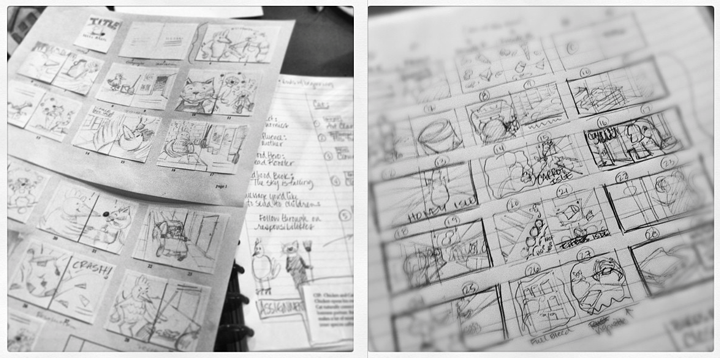
So without further ado, I pass the torch over to Kelli Thrasher-Books, whom I had the privilege of meeting at last year’s Highlights Advanced Illustrator Workshop(an event I recommend to all aspiring illustrators) In addition to being an illustrator, Kelli has also spent many years working as a graphic designer and I’m really looking forward to hearing what she adds to the conversation about her process! I particularly love these images she has documented of her storyboarding work.
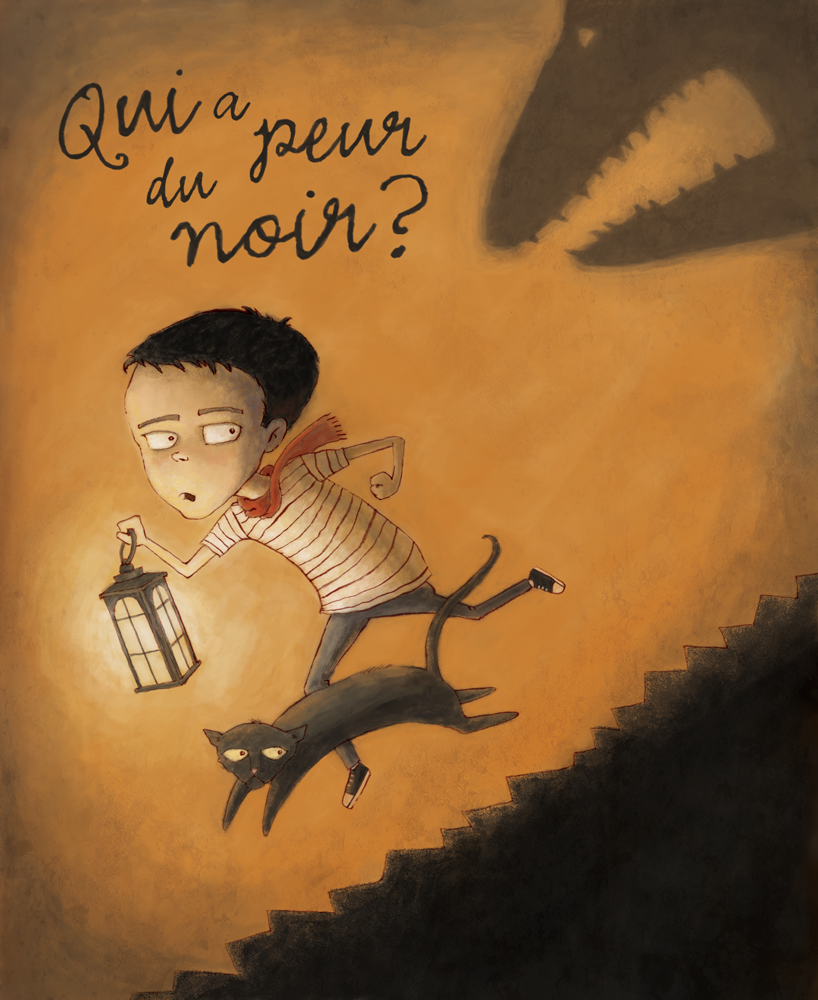
“Who’s afraid of the dark?” illustration by Alice Ratterree
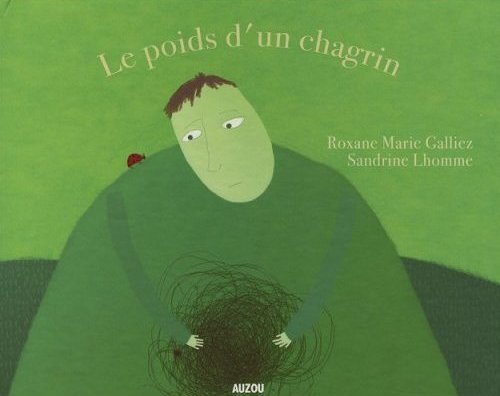
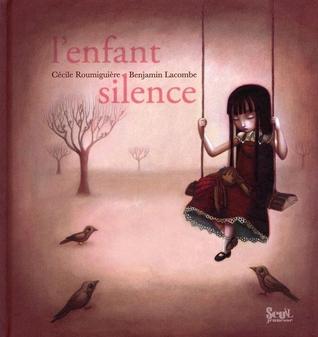
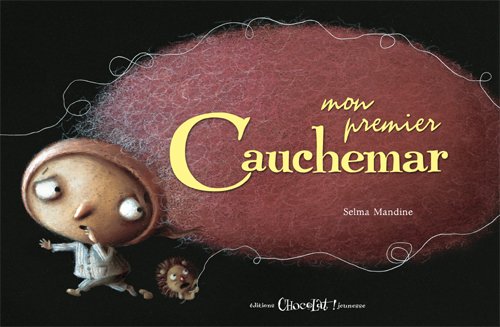
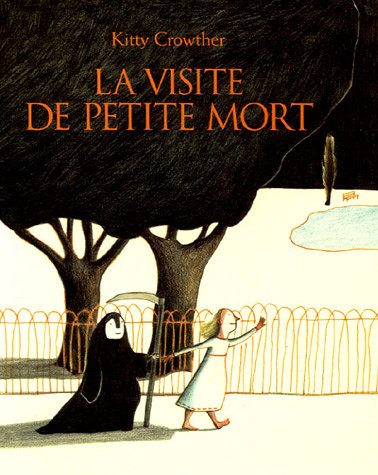
You know that 5 minute window before you actually wake up and are a bit lucid, but still kind of dreaming too? Well, this is a result of that state, the season, and perhaps also as an homage to the dark children’s books frequently produced by French publishers, which I am continuously fascinated by. Take a look at some of these titles to soothe your little one to sleep:
“The weight of grief” illustration by Roxanne Marie Galliez“The silent child” illustration by Benjamin Lacombe“My first nightmare” illustration by Mandine Selma
And my personal favorite,
“The visit of little death” illustration by Kitty Crowther
I love line work, and generally only utilize the pencil and sometimes a pen. Recently, though, I’ve been working with the push and pull of a paintbrush, and I’m very happy with the trembling energy it leaves on the paper. Here’s today’s sketch using watercolor (M. Graham) and a no. 2 Kolinsky sable. I still relied on pencil to start the sketch, then erased draft lines after painting. The sketch was drawn over a block of color I laid down a few weeks ago, when I was testing new paints (M. Graham) and saturation on hot press paper.
Daily sketch 10-07 illustration by Alice Ratterree
The challenge: you have 24 hours to make a work of art. How do you fill the time?
On Friday and Saturday, June 7-8, Greenville’s Metropolitan Arts Council held the annual event, Flat Out Under Pressure. A challenge to create a work of art in 24 hours. On Friday morning, we had our surfaces (free of any markings) stamped and registered. Saturday morning, we were expected to return with art on that surface. The idea of taking 24 uninterrupted hours to spend on one piece offers its own set of unique challenges to different artists for different reasons. As an illustrator, the idea of time is what intrigued me. So why not make a piece about time? 24 hours of time. What happens -or can happen- in 24 hours? Storyboarding. After all, that is what illustrating is all about….telling a story. And a story needs a time.
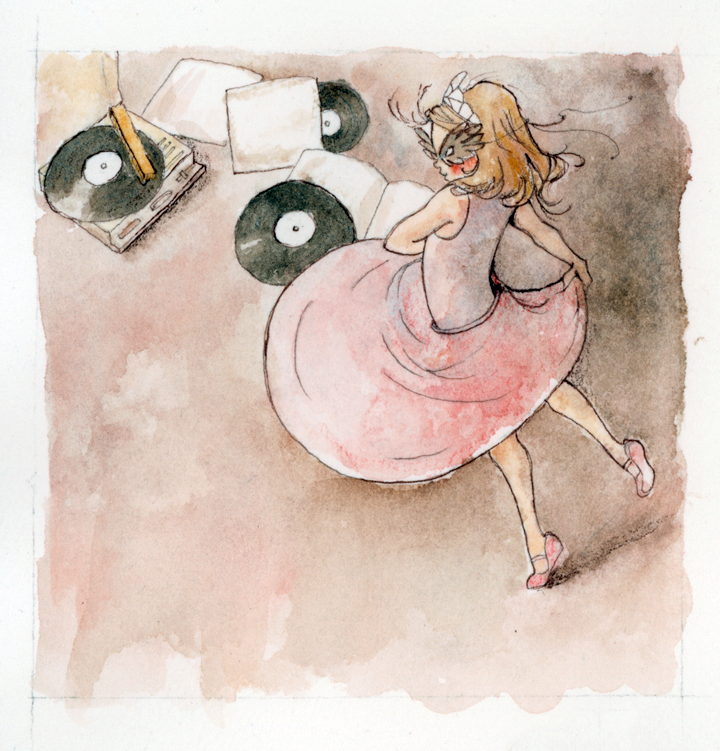
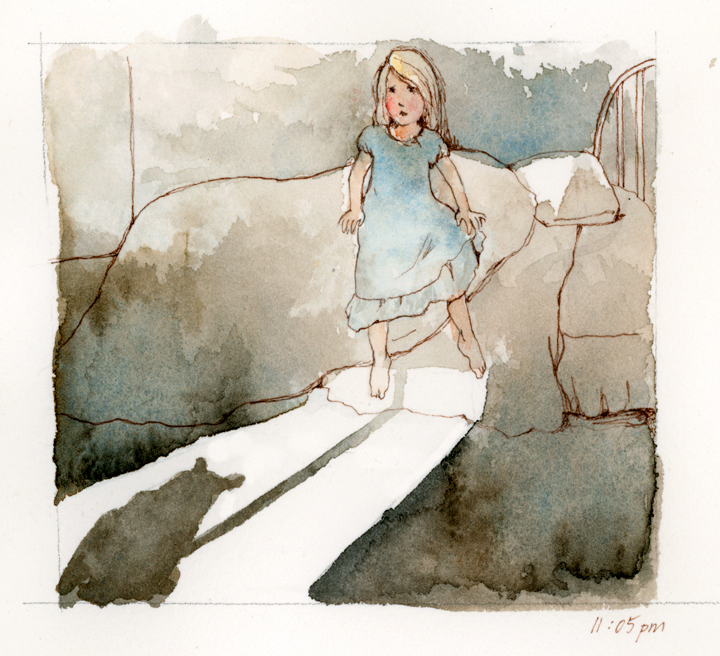
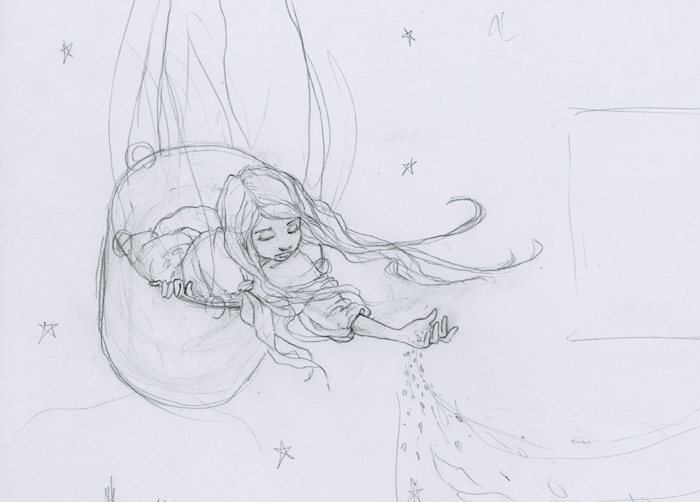
A few excerpts from my piece, “24 hours” – 24 frames capturing 24 hours in the life of Helen
excerpt, “24 hours” illustration study by Alice Ratterreeexcerpt, “24 hours” illustration study by Alice Ratterree
excerpt, “24 hours” illustration study by Alice Ratterree
It’s been quite a while since I pulled an all-nighter, and while my body hurts from it, my cup is filled. Taking home a fourth place award felt pretty nice too.
Illustrator promo of the day: Lisbeth Zwerger. Let’s get real, she needs no promo from me…just want everyone to know about her. Hands down, one of my favorites.
This past weekend, SCBWI Carolinas celebrated their 20th annual conference in Charlotte, NC. I love returning to the well. Inspiring keynotes and energizing breakouts filled our time for three whole days! Illustrators arrived early on Friday for an intensive session with the charming illustrator Priscilla Burris. We were given an assignment ahead of time which was:
Characters Page: Create and develop two characters. Name them.
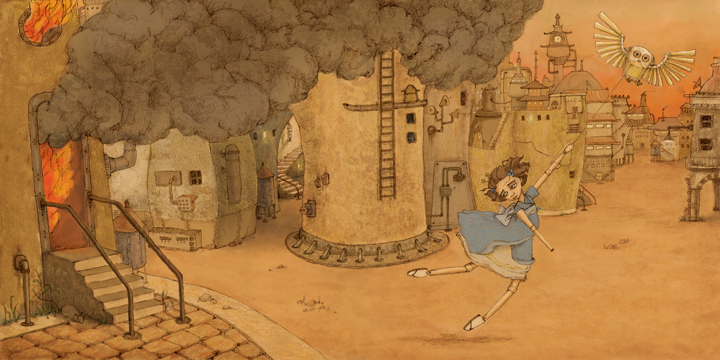
Main Image: Create and Color Finish an image involving both characters, interacting. (Either one page or 2-pg spread)
Before Image: Create and Sketch an image that shows what happened before the Main Image part of the story.
After Image: Create and Sketch an image that shows what happens after the Main Image part of the story.
Daunting to say the least. No restrictions, not even dimensions. Wide open. I have to admit, when I received this challenge, I was rather disappointed, and frankly had a bad attitude. I wanted something to work with. Please oh please don’t leave me alone in the dark recesses of my shallow creativity to make something completely original! I felt like I was suddenly being asked to write, and I wanted to illustrate! Sadly, I realized that I’ve been relying on someone else’s work to propel me into my work. How was I going to start with a completely blank canvas?
The answer was in creating boundaries. I’ve heard it said that if children are playing in a large field with no fence, they will gather together in a tight radius near the middle and not venture out very far from each other, playing within a very limited space. If, however they are provided a fenced in perimeter, they will utilize all the space for play. I read that Dr. Seuss had only a 225 word list with which to work from in writing Cat in the Hat. Boundaries propel us into creative thinking by forcing us to solve problems. Last year at the convention, writer John Bemis left us with a most inspiring keynote that provided some tools to work with when we are faced with creative blocks. We were all asked to write 20 words, then step back and look at them. What did they say? Where was the common thread? Is there any imagery that comes to mind? Next he shared with us a game that included asking a question, then find a picture (from a magazine or a book). The last step is to connect your question with the image you found. How does the image you found answer your question?
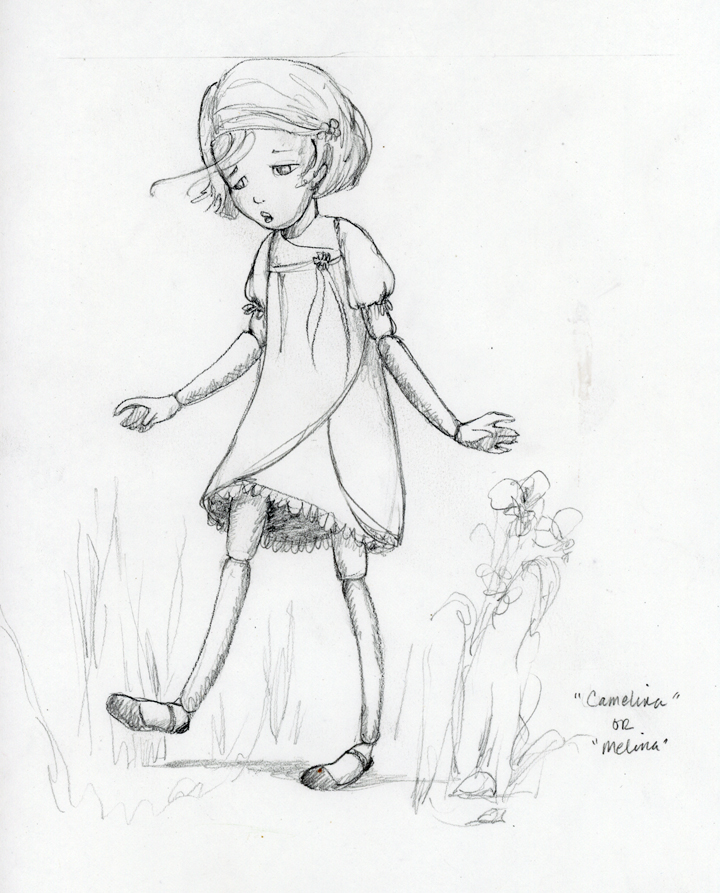
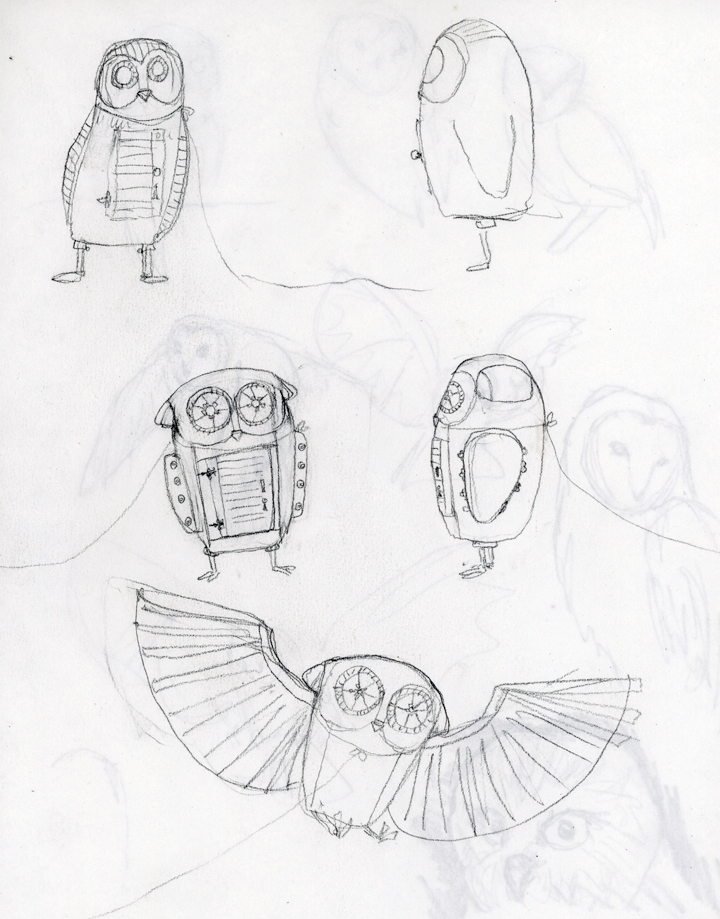
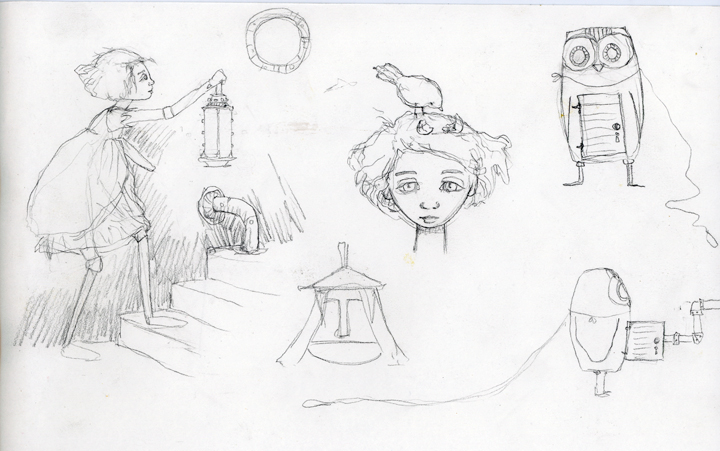
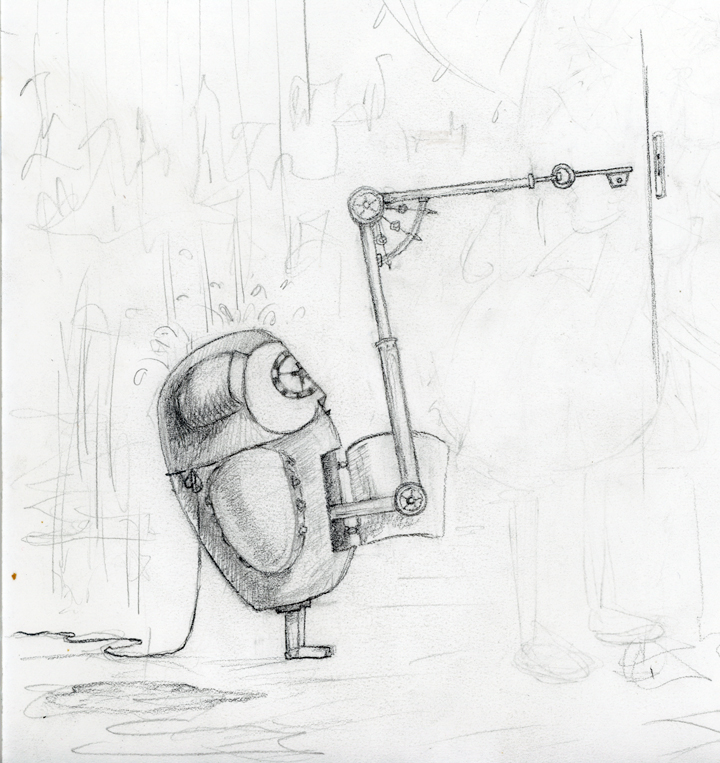
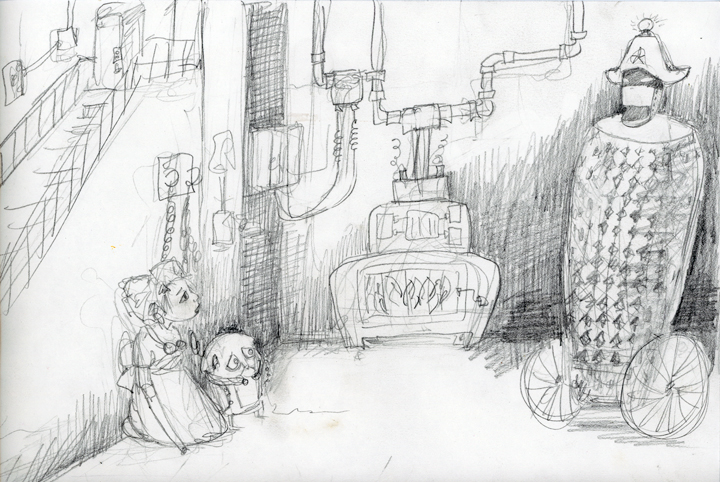
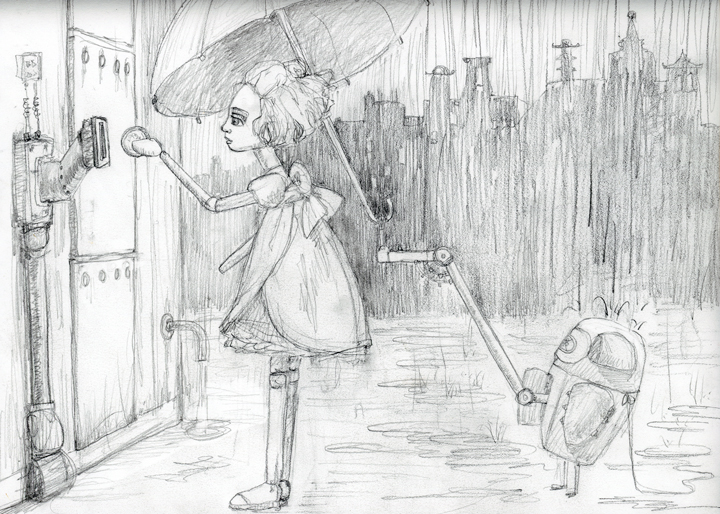
So I decided to play this type of game with my lucid characters I had floating around in my head. I knew I wanted a doll and an owl, but that was where my big idea ended. So I played what I call the “Blind Dictionary” game. This is where you close your eyes and open the dictionary and point. My goal was to find 10 nouns and 10 verbs. Of course I came upon some adjectives and adverbs, but I moved on and didn’t use those. Here were the 10 nouns: (doll and owl I already had), harlequin, thread, hame, factory, kimono, shilling, wheelie, lichen. The 10 verbs were: conspire, spy, twitch, liberate, lick, burn, blow, scoop, retain.Well, I guess that turned out to be only 9, but what resulted was this lush visual material I had now to work with!
So without further ado, meet Commelina:
and her various transformations:
and the clockwork owl, Li:
The illustrated plot sequence:
In the end, I realized I may have some stories to tell after all. If the material is not provided for me, there is material out there if I cut and paste it together and make boundaries. Thank you, Priscilla Burris, and once again, thank you SCBWI!